
This guide cuts through that confusion. Whether you're building a boundary wall, a residential structure, or a commercial complex, understanding how cement block pricing works in Jaipur will help you make smarter decisions and avoid overpaying for the wrong product.
What Determines Cement Block Price in Jaipur
Let's start with the honest truth: there's no single fixed rate for cement blocks. The price you'll encounter in Jaipur depends on a combination of factors that are worth understanding before you call a single supplier.
Block Type
This is the biggest variable. Different block types serve different structural purposes and carry different production costs.
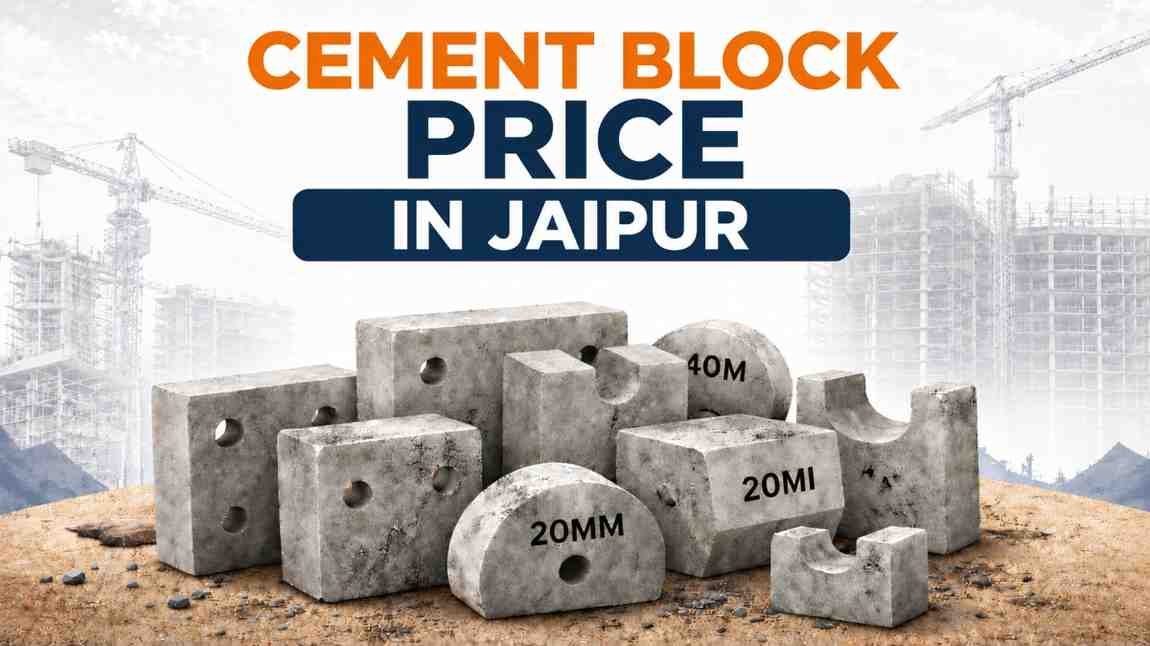
Solid cement blocks are denser and heavier, used where compressive strength is critical. Hollow cement blocks use less raw material, weigh less, and offer better thermal insulation for certain wall types. Fly ash blocks use industrial byproduct materials and are increasingly popular in green construction. Each type has a different cost profile, and mixing them up in your planning will throw your entire budget off.
Raw Material Quality
Not all cement is the same, and not all aggregates are equal. Manufacturers using higher-grade OPC (Ordinary Portland Cement) with well-graded sand and aggregates produce stronger blocks. But stronger means costlier. I've noticed that buyers who only chase the lowest quote often discover, mid-project, that the blocks don't meet structural requirements. That discovery is expensive.
Production Method
Blocks made using automated vibro-compaction machines have far better density and dimensional consistency than manually produced ones. The machinery investment reflects in the product quality. When I compared two batches of 6-inch blocks from different suppliers, the difference in surface finish and weight consistency was immediately visible, even before any structural testing.
Order Volume and Delivery Distance
Bulk orders almost always come with better unit economics. And in Jaipur, sourcing from a manufacturer with good logistics coverage in Rajasthan versus one who charges hefty transportation will impact your effective per-block cost significantly.
Types of Cement Blocks Available in Jaipur
Getting this right matters as much as the price itself. Using the wrong block type is like wearing the right shoe on the wrong foot. It technically fits, but it creates problems down the road.
Solid Concrete Blocks
The workhorse of heavy construction. Used for load-bearing walls, compound walls, and foundations. These are your go-to when structural strength is non-negotiable.
Hollow Concrete Blocks
Popular for partition walls and non-load-bearing structures. The hollow cores reduce material usage and allow for electrical conduit or reinforcement rods to pass through, which speeds up construction considerably.
Fly Ash Bricks and Blocks
Manufactured using fly ash, a byproduct of thermal power plants, these blocks have gained significant traction across Rajasthan. They're lighter, offer reasonable strength, and align with green building standards. Many Jaipur builders use them as a cost-effective alternative to traditional red bricks.
Interlocking Blocks
Used for specific wall systems and retaining structures. They don't require mortar in many applications, which can reduce labour costs meaningfully on the right project.
Paver Blocks
Technically a subset of cement blocks, used for flooring, pathways, and outdoor surfaces. Worth understanding separately if your project includes any outdoor paving component.
Why Quality Should Come Before the Quote
Here's something that doesn't get said enough: a cheaper block that fails inspection or shows cracking within two monsoon seasons is never actually cheaper. The rework costs, structural concerns, and contractor fees to redo sections of a wall will dwarf whatever you saved upfront.
According to a report by the Indian Green Building Council, construction defects linked to substandard masonry materials account for a significant share of premature structural repairs in residential projects across Tier 1 and Tier 2 Indian cities.
In my experience, the builders who end up happiest with their projects are the ones who locked in quality first and then negotiated on volume and delivery terms, not on the fundamental material spec.
Goyal Cement Blocking is one supplier that consistently comes up in conversations with contractors working across Delhi-NCR and Rajasthan. Their manufacturing process prioritises compressive strength and dimensional accuracy, which matters if you're working with contractors who need consistent block sizing across a large build.
How to Compare Suppliers Properly
Most buyers just ask "what's your rate?" That's the wrong first question. By the time you're comparing prices, you should already have confirmed that the products being compared are actually equivalent.
Here's a checklist worth using before you shortlist any supplier:
- Ask for compressive strength specifications (minimum IS standard for your block type)
- Request sample blocks before committing to bulk orders
- Confirm production method (machine-made vs manually produced)
- Check for IS certification or any third-party quality testing documentation
- Clarify dimensional tolerances (variation in length, width, height across a batch)
- Understand delivery terms (does the quoted price include transport to site?)
- Ask about minimum order quantities and lead time for large orders
Skipping any of these steps is how buyers end up with a site full of blocks that don't stack plumb or don't meet the structural engineer's specifications.
Jaipur's Construction Context: What Makes It Different
Jaipur is one of Rajasthan's fastest-growing urban markets. The city's expanding residential corridors, commercial developments, and infrastructure projects have created consistent demand for quality building materials.
The local construction culture in Jaipur also has a few specific traits worth noting. A lot of residential construction here still relies on traditional approaches, but increasingly, contractors and builders are moving toward cement blocks because they're faster to lay, easier to plaster over, and structurally more predictable than fired clay bricks.
I've noticed that Jaipur contractors, in particular, value suppliers who can guarantee consistent supply during peak construction months, roughly October through March when weather conditions are optimal. A supplier who can't maintain steady stock during those months disrupts project timelines in ways that are hard to recover from.
The Right Block for the Right Job
Matching the block to the application sounds obvious, but it's surprising how often this gets overlooked in the rush to get a project moving.
For boundary walls and compound construction: Hollow blocks with adequate compressive strength work well. They're economical, easy to lay, and structurally appropriate for non-structural walls.
For residential load-bearing walls: Solid blocks meeting IS 2185 Part 1 specifications are the appropriate standard. Don't compromise here.
For commercial and industrial construction: You'll likely need a structural engineer's recommendation for specific block grades and laying patterns.
For outdoor paving, pathways, and driveways: Paver blocks are specifically engineered for this application. Using regular wall blocks for paving is a shortcut that typically creates surface cracking problems within a season or two.
Sourcing Smart: Beyond the Local Market
One shift worth considering for larger projects is looking beyond purely local Jaipur suppliers if local options don't meet your quality threshold. Manufacturers based in Haryana, for example, serve Rajasthan regularly and often bring better production infrastructure given their proximity to key raw material sources.
Goyal Cement Blocking, headquartered in Hodal, Haryana, regularly supplies clients in Jaipur and across Rajasthan. Their product range covers both structural and paving applications, and they're set up for both smaller project orders and large bulk requirements. When I looked at their product specifications relative to local alternatives, the compressive strength figures were notably consistent across batch samples.
If you're managing a medium to large project and the local supply situation in Jaipur is tight or inconsistent, exploring suppliers from the Haryana-NCR corridor is a practical and well-established approach among experienced contractors.
Red Flags When Buying Cement Blocks
A few things that should make you pause before placing an order:
- Blocks that look visibly uneven or have rough, inconsistent surfaces
- Suppliers who cannot provide any IS standard certification or test reports
- Quotes that are dramatically below market range without a clear explanation
- Vague answers when you ask about compressive strength or raw material specifications
- No sample policy whatsoever before bulk ordering
Any of these individually could be a one-off. Multiple flags together are a clear signal to keep looking.
Understanding cement block price in Jaipur is really about understanding value, not just the number on a quote. The right block at the right specification, sourced from a manufacturer with consistent quality controls, will serve your structure for decades. That's the calculation worth making.