
Imagine you are standing inside a building that is ten years old. The walls look fine from the outside. The paint is a bit worn, sure, but nothing alarming.
Then you look closer. There are rust stains bleeding through the plaster. Thin cracks running along the beams. A corner column that has started to spall, exposing corroded steel underneath.
The engineer who inspects it shakes his head and says something that should never have to be said after a decade: "The cover was insufficient."
That sentence, those four words, represent a failure that started not with bad cement or poor-quality steel, but with one overlooked product during construction. A product so small that many workers barely notice it. A product called the RCC cover block.
This blog is about why that small block carries enormous responsibility, and why no serious building project should move forward without it.
What Exactly Is an RCC Cover Block and Why Does It Exist?
Before we get into applications and benefits, let us get one thing straight.
In reinforced cement concrete construction, steel bars are placed inside concrete to handle tensile forces. Concrete is brilliant under compression, but it cracks under tension. Steel fills that gap. Together, they form RCC, the backbone of almost every structure built in India today.
But steel has one major weakness: it corrodes when exposed to moisture and oxygen.
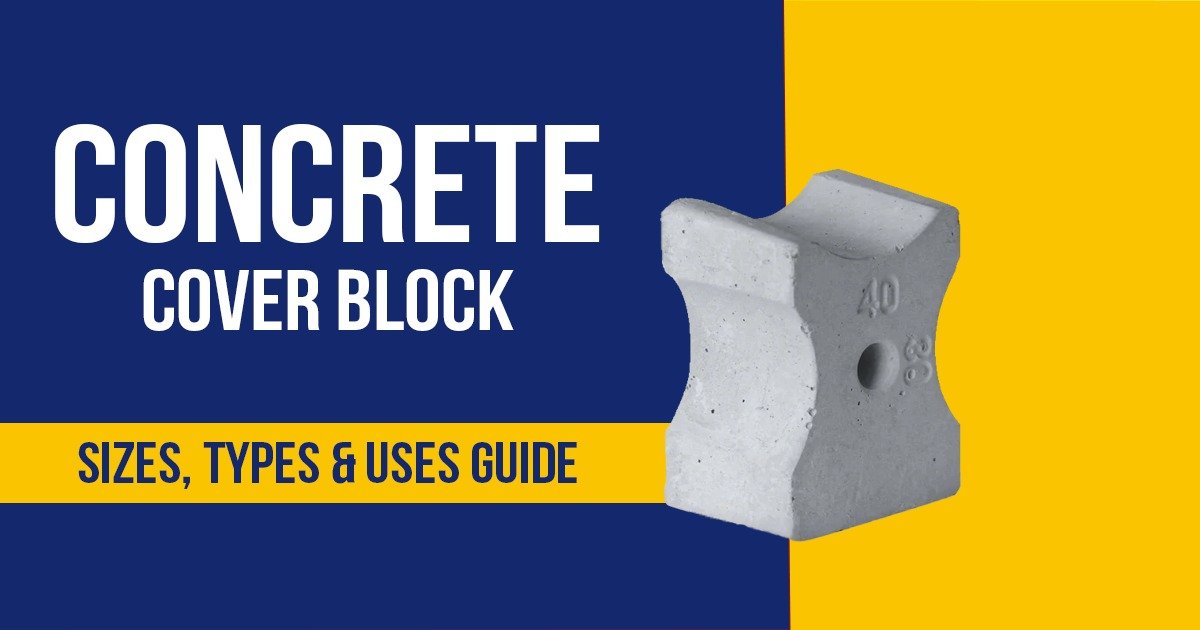
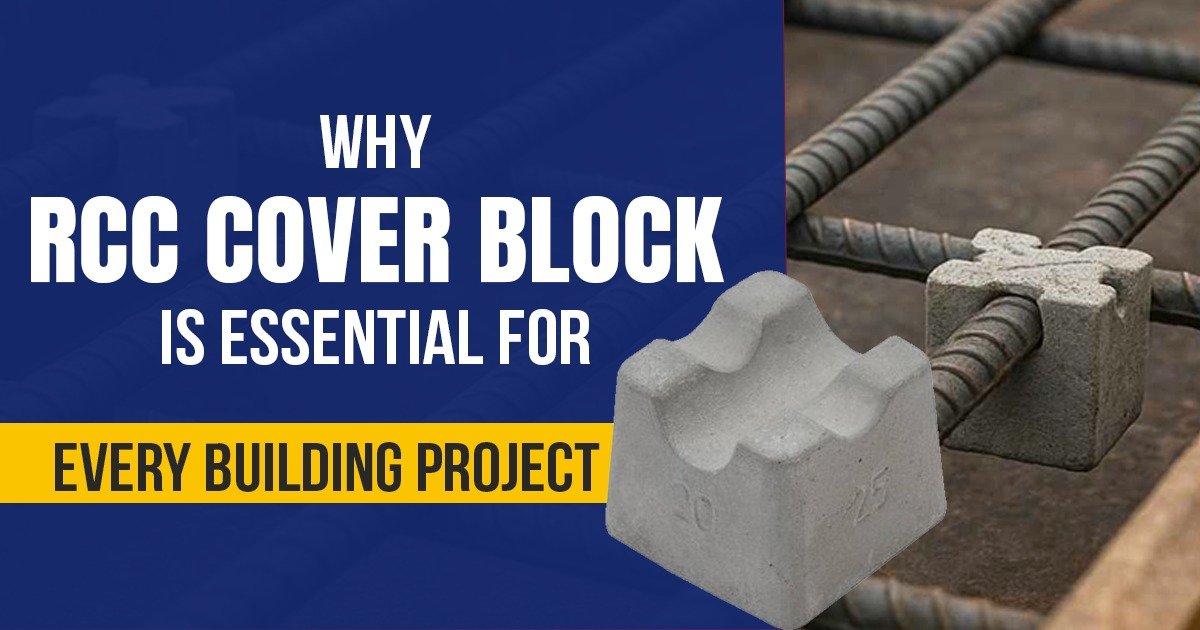
The concrete surrounding the steel is its protection. That protective layer of concrete between the outermost steel bar and the concrete surface is called the "clear cover." And the RCC cover block is the physical device that ensures this cover is maintained at the exact required thickness during and after the pour.
Without it, reinforcement bars rest directly on formwork or soil, giving you zero cover at the contact points. That is where corrosion begins. That is where structures start failing.
It is really that straightforward.
The Myth That Needs Busting Right Now
Here is a belief that still floats around on smaller construction sites: "Experienced workers can judge cover by eye. We have been doing this for years without cover blocks."
This is not a harmless belief. It is an expensive and dangerous one.
Human judgment on a busy construction site, where dozens of tasks are happening simultaneously, is unreliable when it comes to millimetre-level precision. A worker might estimate 25mm and place the bar 15mm from the surface. Another might overcompensate and go to 35mm, wasting concrete cover unnecessarily without improving protection.
Neither outcome is acceptable when IS 456:2000 specifies exact cover requirements based on structural exposure conditions.
An RCC cover block removes human error from the equation entirely. It is a fixed dimension. It does not shift because a worker estimated incorrectly. It does not change when the pour begins. It sits there and does its job precisely, every single time.
A Closer Look at Where Cover Blocks Are Actually Used
Construction is not one environment. A foundation behaves differently from a roof slab. A column faces different stresses than a retaining wall. Let us walk through the major structural elements and understand how cover blocks function in each one.
Slabs: The Most Common Application
Every floor slab and roof slab in an RCC structure requires bottom cover for the tension reinforcement. The rebar mesh is placed first, cover blocks are positioned underneath it, and then the top layer of reinforcement follows.
For a typical residential slab in moderate exposure, 25mm to 30mm clear cover is standard. Cover blocks placed at regular intervals, roughly every 600mm to 800mm in both directions, ensure the mesh does not sag or touch the formwork during the pour.
When concrete vibrators are used, the slab reinforcement gets subjected to significant movement. A well-placed RCC cover block holds its position through all of that.
Columns: Four-Sided Precision Required
Columns are unique because they need cover on all four sides simultaneously. The longitudinal bars run vertically, and lateral ties bind them together, but the entire cage must sit at the correct distance from the shuttering on every face.
Chair-type or clip-on cover blocks designed for columns are placed between the outer bars and the formwork. They ensure the cage stays centred within the column cross-section, preventing thin cover on any side.
A column with uneven cover is not just a code violation. It is a column that will fail non-uniformly under load and environmental attack.
Beams: Both Bottom and Side Cover Matter
Beams carry their own set of requirements. The tension steel at the bottom needs bottom cover, while the stirrups need side cover. Both must be maintained throughout the pour.
In beam-slab construction, this becomes even more critical because the pour for both elements often happens simultaneously. Cover blocks in the beam zone must be robust enough to survive the weight of wet concrete above them without being displaced.
Footings and Foundations: The First Line of Defence
This is where many engineers increase the required cover significantly.
Footings sit in soil. Soil contains moisture. Moisture may contain chlorides, sulphates, and other chemicals depending on the site geology. IS 456 mandates 50mm cover for concrete cast against and permanently exposed to earth.
For aggressive soil conditions, that requirement goes even higher.
An RCC cover block of the correct size placed under footing reinforcement before the first concrete layer is poured gives you that protection reliably, every time, without depending on a worker to maintain it manually during the pour.
Five Real Reasons Builders Cannot Afford to Skip This Step
Let us move past theory and talk about what actually happens on site when cover blocks are used correctly versus when they are skipped or done poorly.
Structural integrity over decades: Properly covered reinforcement can last 50 to 100 years in normal conditions. Exposed or under-covered steel corrodes within years in humid or coastal environments.
IS code compliance: Third-party auditors, structural consultants, and quality certifications all check cover depths. Failing these checks creates delays, rework, and in serious cases, legal liability.
Prevention of spalling: Spalling is when the concrete surface breaks off due to the pressure of expanding corroded steel underneath. Once it starts, it accelerates. Cover blocks prevent the root cause.
Cost of repair versus cost of prevention: Retrofitting cover or treating corroded structural elements in a completed building costs many times more than using proper cover blocks from day one.
Uniform load distribution: Correctly positioned reinforcement, maintained by cover blocks, ensures the structure performs as designed under load. Displaced or tilted bars change the structural behaviour in ways that are impossible to account for after the fact.
Choosing the Right Cover Block: What Site Teams Should Know
Not all cover blocks are the same. Selecting the right one for the right application matters.
Cover blocks are available in different materials:
Cement cover blocks are traditional, economical, and widely available. They work well in most standard applications. The key is sourcing from a supplier who manufactures them with consistent mix proportions and precise moulds.
Concrete cover blocks offer higher compressive strength and are suitable for heavy structural applications where the block itself may face significant load during the pour.
PVC and plastic cover blocks offer dimensional consistency and zero water absorption. They are increasingly preferred in quality-conscious projects.
Standard sizes range from 15mm for interior elements in very mild conditions to 75mm and above for foundations in aggressive environments. Matching the block size to the IS specification for your specific element and exposure condition is non-negotiable.
The Goyal Cement Blocking Difference: Built on Site Reality
There are hundreds of cover block manufacturers in India. What separates a trusted name from the rest is not just product quality but an understanding of what actually happens on construction sites.
Goyal Cement Blocking has been built around that understanding.
Contractors who work with Goyal consistently mention the same things. The dimensions are accurate. A 40mm block from Goyal measures 40mm, not 38mm, not 42mm. When you are specifying cover to meet IS 456 and your quality auditor arrives with a cover meter, that 2mm difference matters enormously.
The blocks do not crumble during handling and placing. On a large site where workers are moving quickly, a cover block that breaks under the weight of a reinforcement cage is useless. Goyal blocks maintain their integrity through the full construction process.
Supply reliability is the other factor that contractors emphasise. A project that runs out of cover blocks mid-slab is a project that either stops or makes compromises. Neither outcome is acceptable. Goyal's production capacity and logistics support consistent supply even for large infrastructure and multi-storey projects.
The brand does not need to advertise heavily. On construction sites, reputation travels through the people who actually place the blocks, tie the rebar, and pour the concrete. Among that community, Goyal Cement Blocking has earned genuine trust.
Every Millimetre Counts
The construction industry in India is maturing. Builders are being held to higher standards. Quality audits are becoming the norm, not the exception. Structural failures are being investigated and held up as examples of what happens when basics are ignored.
The RCC cover block is one of those basics. It is inexpensive relative to the total project cost. It is easy to install. It requires no special skill. And yet its absence or incorrect use can compromise a structure that is meant to stand for generations.
If you are a contractor, structural engineer, or procurement manager who takes quality seriously, partnering with a reliable supplier is the first step.
Goyal Cement Blocking is that partner. Accurate dimensions, consistent quality, reliable supply, and a product that does exactly what it is supposed to do, every single time.
Because when the concrete sets, what is inside it is permanent. Make sure what is inside is right.
Frequently Asked Questions
Quick answers to what people usually ask.