
Let me tell you about a problem that almost every contractor in India has faced at least once.
You spend weeks on a project. The concrete is poured. The structure looks solid. Then, three years down the line, rust stains start appearing on the surface. Cracks follow. The owner calls. The blame game begins.
What went wrong? In most cases, the answer is shockingly simple: the steel reinforcement was not sitting at the right distance from the concrete surface.
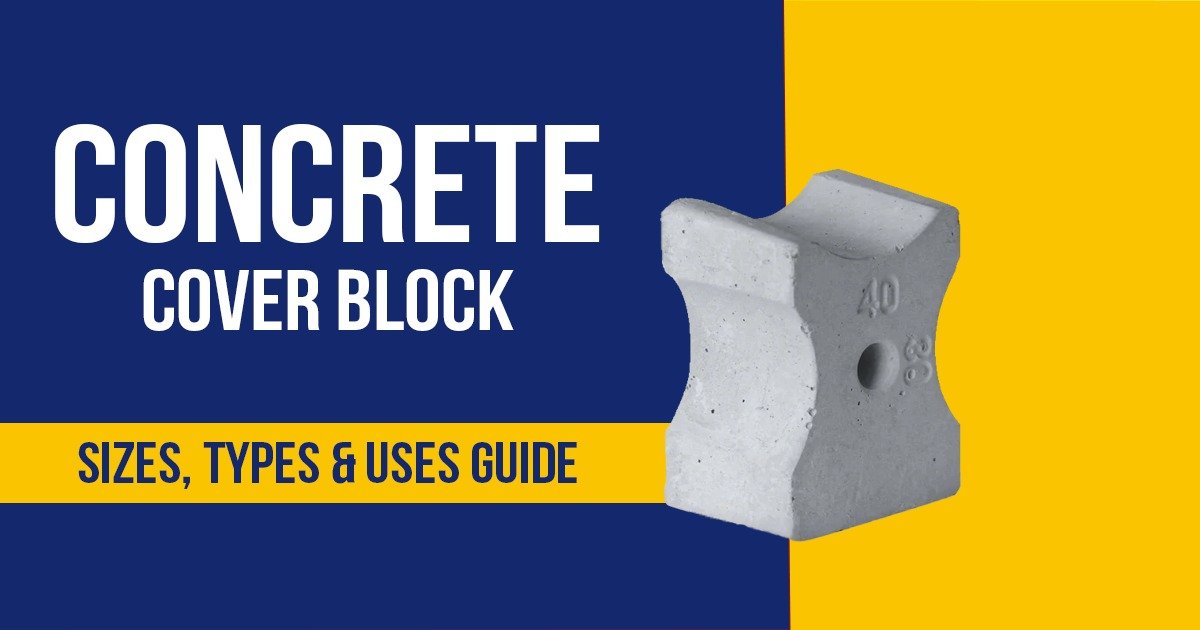
That gap, that precise space between the rebar and the outer edge of the concrete, is called the "cover." And the small, often-overlooked product that maintains it is called a cover block.
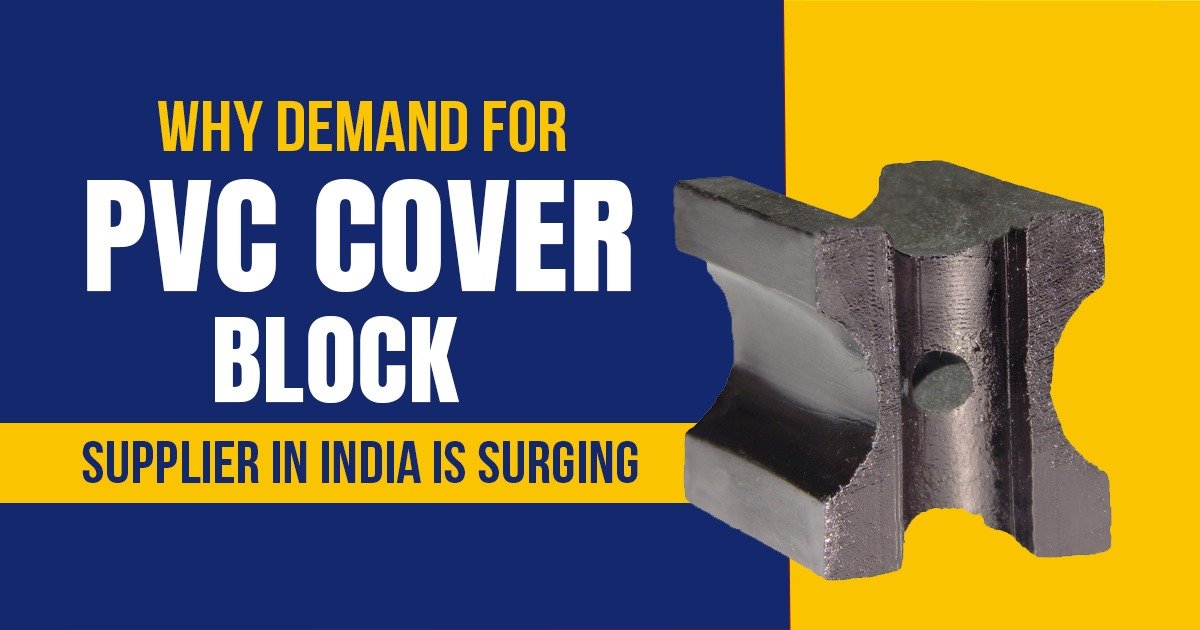
This is exactly why the search for a reliable PVC cover block supplier in India has gone from a quiet requirement to an urgent need across construction sites nationwide.
The Cover Block: Small Product, Massive Responsibility
Most people outside the construction industry have never heard of a cover block. Even some new site supervisors treat it as an afterthought.
But here is the truth: without proper concrete cover, your RCC structure is slowly working against itself.
Steel and concrete are meant to work as a team. Concrete handles compression. Steel handles tension. For this partnership to last decades, the steel must be fully encased within the concrete, protected from moisture, oxygen, and chemicals that cause corrosion.
If the rebar sits too close to the surface, even by a centimetre or two, water seeps in. Rust begins. The steel expands. The concrete cracks. What started as a minor oversight becomes a structural failure.
Cover blocks, whether made from cement, concrete, or PVC, are the physical spacers that hold reinforcement bars at the exact required distance during and after casting.
So Why Is PVC Specifically Gaining Ground?
For years, cement and concrete cover blocks dominated Indian construction sites. They were cheap, locally available, and familiar.
But familiar is not always better.
Here is what builders started noticing on the ground:
Cement cover blocks would break under pressure. During rebar binding and concrete pouring, workers walk over the reinforcement cage, tools get dropped, and the site is anything but gentle. Traditional cement spacers would crack, shift, or crumble, causing the rebar to sag or tilt before the concrete even set.
Sizing was inconsistent. A cover block labelled "40mm" from one supplier might actually be 37mm or 43mm. Over a large slab or column grid, these small variations add up to serious non-compliance with IS codes.
Water absorption was a hidden problem. Cement cover blocks absorb moisture. In certain conditions, this can create a minor but real moisture pathway right where you are trying to build a barrier.
PVC cover blocks addressed all of these issues practically. They are harder to crush accidentally, dimensionally stable, and completely non-absorbent.
This shift in preference is one of the core reasons why demand for a PVC cover block supplier in India has surged so noticeably in recent years.
Where Are These Blocks Actually Used? Real Site Scenarios
Let us walk through a real construction scenario to understand the practical importance.
On a Flat Slab
Imagine a residential apartment project in Pune. The structural engineer has specified 25mm clear cover for the slab reinforcement. The contractor places the bottom mesh across the entire floor plate and starts pouring concrete.
Without cover blocks, the mesh rests directly on the formwork. When concrete is poured, it flows under the steel, but the cover is essentially zero or dependent on how well workers lift the mesh during pouring. That is not engineering. That is guesswork.
With PVC cover blocks placed at regular intervals, the mesh is lifted uniformly to exactly 25mm. Every single point on that slab now meets the specification.
In Columns
Columns take a beating. They carry the entire load of the floors above, and they are exposed on all four sides. Here, the cover blocks must hold vertical bars in precise position while also surviving the vibration of the concrete poker.
PVC chair-type cover blocks, which clip around the rebar, are particularly effective here. They do not slide, they do not break under vibration, and they ensure four-sided cover uniformity in a way that is hard to achieve with loose cement spacers.
In Footings and Grade Beams
Underground elements face the harshest environment. Soil moisture, sulphates, and chlorides from groundwater can attack unprotected steel rapidly.
IS 456 specifies 50mm cover for foundations in normal exposure and higher for aggressive environments. Getting this right at the footing level is non-negotiable. PVC cover blocks with the correct thickness, placed before the reinforcement cage is lowered, make this a reliable, repeatable process.
The IS Code Connection: It Is Not Optional
Here is something every builder, contractor, and site engineer should know.
IS 456:2000, the Bureau of Indian Standards code for plain and reinforced concrete, specifies minimum cover requirements based on exposure conditions:
- Mild exposure (indoor structures): 20mm
- Moderate exposure (sheltered outdoor): 30mm
- Severe exposure (in water, high humidity): 45mm
- Very severe and extreme conditions: 50mm and above
These are minimums, not suggestions. Non-compliance can create liability for engineers, loss of certification for contractors, and real danger for occupants.
A good PVC cover block supplier in India provides blocks in all these standard sizes, clearly marked, so that site teams do not have to guess or improvise.
What Has Changed in the Indian Construction Market?
Three things have shifted the demand curve significantly.
1. Quality-conscious developers are raising standards. Large builders and real estate developers are now conducting third-party quality audits. Inspectors check cover depths using cover meters. Projects that fail these checks face delays and penalties. This has pushed contractors to take cover blocks seriously rather than treating them as optional.
2. Government infrastructure projects demand compliance. PMAY housing, metro rail packages, road bridges, and industrial structures are all subject to strict quality control. Suppliers who can consistently deliver dimensionally accurate PVC cover blocks in large volumes are now in high demand.
3. Awareness is growing at the site level. Structural engineers and quality consultants are actively educating site supervisors. The message is getting through: a cover block is not a luxury, it is a structural requirement.
Common Mistakes That Cost Builders Dearly
Even when contractors know they need cover blocks, mistakes happen. Here are the most frequent ones:
- Using random pieces of brick or stone as improvised spacers. These have no consistent dimension and shift easily.
- Placing cover blocks too far apart. Even the right block loses its effectiveness if placed only at one-metre intervals on a slab. The rebar sags between support points.
- Mixing up sizes on site. If your slab requires 25mm and your column requires 40mm, both types must be clearly labelled and separated before distribution to workers.
- Choosing a supplier based purely on price. Dimensional inconsistency in cheap cover blocks can create the same problem as using no cover block at all.
Why Goyal Cement Blocking Stands Out
In a market flooded with suppliers, trust is earned through consistency.
Goyal Cement Blocking has built a reputation among contractors, builders, and civil engineers for one straightforward reason: what the block says on the surface is what you actually measure on site.
Builders who have worked with Goyal Cement Blocking point to a few things that matter in the real world:
Accurate dimensions, every batch. When you order 40mm PVC cover blocks, you get 40mm. This sounds basic, but it is surprisingly rare in a market where quality control is inconsistent.
Availability across standard sizes. From 15mm for interior slabs to 75mm for marine or industrial foundations, the range covers the full spectrum of IS-specified requirements.
Reliable supply for large projects. Infrastructure and real estate projects cannot afford mid-construction shortages. Goyal Cement Blocking has the production capacity and logistics to support projects at scale without delays.
Trusted by professionals. From individual house builders to large contractors handling multi-storey residential and commercial work, the brand has quietly become a reference point for quality in this segment.
It is not about flashy marketing. It is about showing up consistently with a product that does exactly what it is supposed to do.
Closing Thought
The next time you walk past a construction site, look at the reinforcement cages before the concrete goes in. Those small plastic or cement pieces holding the bars off the ground or away from the shuttering? They are doing quietly critical work.
The surge in demand for a trusted PVC cover block supplier in India is not a trend. It is the construction industry growing up, taking quality seriously, and recognising that long-lasting structures are built correctly the first time.
If you are a builder, contractor, or procurement manager looking for consistent, code-compliant PVC cover blocks, Goyal Cement Blocking is a name worth knowing.
Because in construction, the details you cannot see after the pour are the ones that matter the most.
Frequently Asked Questions
Quick answers to what people usually ask.