
The Myth That Costs Crores Every Year
Myth number one. "Any small piece of concrete can work as a cover block."
Myth number two. "Cover blocks are not that important. Just put some stones or broken tiles."
Myth number three. "All cement cover blocks are the same. Buy the cheapest."
These three myths have destroyed more Indian buildings than earthquakes have. No exaggeration.
Every year, construction sites across the country pour lakhs of cubic meters of concrete. And a shocking percentage of that concrete contains wrong cover thickness. Crushed blocks. Undersized spacers. Or no cover blocks at all.
The result? Rusted steel. Cracked concrete. Collapsed balconies. Leaking roofs. Buildings that should have lasted sixty years start failing in six.
The solution is not complicated. It starts with choosing the right Cement Cover Block Manufacturer in India. One who understands that a small block carries a giant responsibility.
Goyal Cement Blocking has spent eight years fighting these myths. Not with lectures. With consistent quality. Let us break down what really happens on site and how a serious manufacturer makes all the difference.
First Things First. What Is a Cement Cover Block and Why Does It Breathe?
Think of reinforcement bars as the skeleton of a concrete building. Now think of concrete as the skin and muscles. The cover block is the gap that keeps the skeleton from touching the outer skin.
If the skeleton touches the skin, moisture seeps in. Rust starts. Rust expands. The skin cracks and falls off. That is spalling.
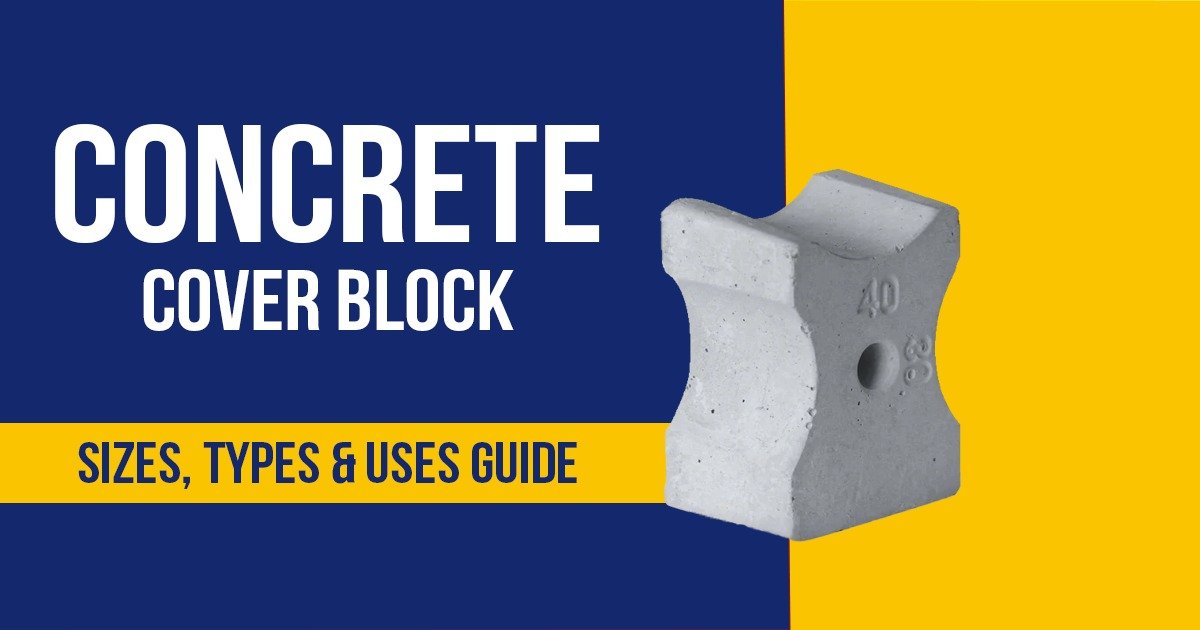
A cement cover block sits between the steel bar and the formwork. It ensures a fixed gap. That gap is called cover. And cover is the only thing standing between your steel and the outside world.
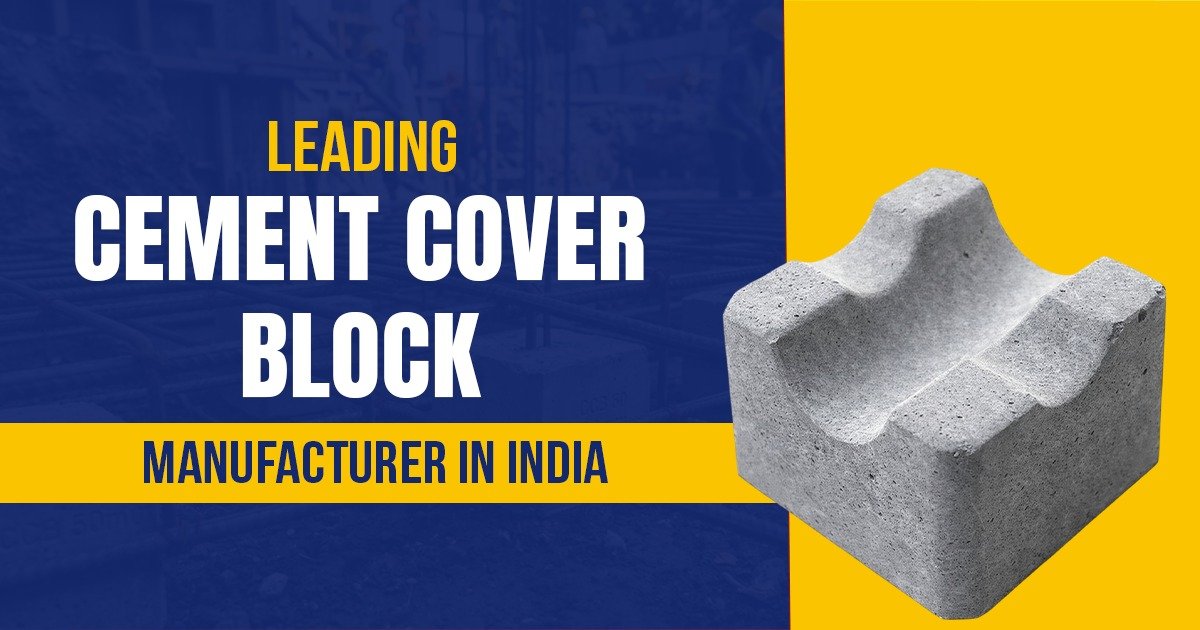
A reliable Cement Cover Block Manufacturer in India makes blocks that are strong, precise, and durable. A bad manufacturer makes blocks that crush, crack, or dissolve.
Now let us walk through the eight ways a quality manufacturer ensures you never face cover related failures.
Eight Non Negotiable Quality Checks from a Serious Manufacturer
1. Raw Material Rejection at the Gate
A good manufacturer does not accept every truck that arrives. They test.
Cement should be fresh, lump free, and from a reputed brand. Sand should be free from silt, clay, and organic matter. Aggregates should be well graded with no dust coating.
If the raw materials fail the test, the truck goes back. No compromise.
Goyal Cement Blocking follows strict incoming material inspection. Because bad inputs cannot make good outputs.
2. Scientifically Designed Mix Ratio
Cover blocks need higher strength than regular concrete. Why? Because they face point loads from heavy reinforcement bars. They also face the vibration of needle vibrators and the pressure of fresh concrete.
A weak mix produces blocks that crumble under these forces.
A good Cement Cover Block Manufacturer in India uses a rich mix. Typically higher cement content and a low water cement ratio. Some manufacturers also use plasticizers to improve workability without adding water.
3. Precision Molding for Accurate Dimensions
Here is a common site problem. The drawing says 25mm cover. The block measures 22mm. The worker does not notice. The steel ends up too close to the surface.
Within two years, rust stains appear on the finished concrete.
A quality manufacturer uses hardened steel molds that do not wear out quickly. Every block is checked for dimensional accuracy. Tolerances are kept within plus or minus 1mm.
Goyal Cement Blocking maintains mold calibration records. They know that accuracy saves buildings.
4. Proper Compaction During Casting
If the concrete mixture is not compacted properly inside the mold, air pockets remain. Air pockets become weak spots. Weak spots become cracks.
A serious manufacturer uses vibration tables or mechanical presses to ensure dense, honeycomb free blocks.
5. Seven Days of Mandatory Curing
This is where cheap manufacturers cheat. They demold the blocks in 24 hours and stack them in the sun. No curing. No water. No strength gain.
A quality manufacturer cures every block for at least seven days. Either in water tanks or under wet cover. This allows the cement to fully hydrate and reach its designed strength.
Uncured blocks can be crushed by hand. Cured blocks need a hammer to break.
6. Compression Testing Before Dispatch
Testing is not optional. Every batch should be tested for compressive strength. The minimum standard is 30 N/mm². Many good manufacturers exceed that.
Testing can be done with a compression testing machine. A simpler site friendly test is the drop test. Drop a block from one meter height. A strong block remains intact or cracks slightly. A weak block shatters.
Goyal Cement Blocking tests regularly and keeps batch records for traceability.
7. Visual Grading for Surface Defects
Even after passing strength tests, blocks are visually inspected. Cracks, spalling, honeycombing, or uneven edges mean rejection. Only visually perfect blocks go to the customer.
8. Proper Packaging and Storage
Poorly stored blocks absorb moisture or get chipped edges. A quality manufacturer stores blocks on wooden pallets under a roof. They are stacked carefully to avoid breakage.
Real Site Applications. Where Exactly Are These Blocks Used?
Let us walk through a typical RCC structure and see where cover blocks play their role.
Slabs
In a residential slab, the cover block sits under the bottom reinforcement. It lifts the steel off the formwork. The specified cover is usually 15mm to 25mm depending on exposure.
If the cover block is weak, the steel sinks. The cover reduces. Cracks appear on the ceiling. Water leaks through.
A good Cement Cover Block Manufacturer in India provides slab blocks that are flat, stable, and strong enough to hold the steel mesh without sinking.
Beams
Beam reinforcement is heavy. Multiple bars. Large diameters. The bottom cover blocks bear significant weight.
If the block crushes, the main steel touches the formwork. After deshuttering, you see exposed steel at the beam bottom. That beam is already compromised.
Quality cover blocks for beams are made with higher strength concrete. They are often larger in size to distribute the load.
Columns
Column cover blocks are different. They are often tied to the vertical bars with wire to prevent slipping during concreting.
The challenge in columns is maintaining cover on all four sides. Uneven blocks can push the reinforcement cage off center.
A reliable manufacturer supplies column blocks with consistent thickness and sometimes pre attached wire loops for easy tying.
Footings
Footings are buried underground. They face ground moisture, aggressive chemicals, and termites. Cover here is critical for corrosion protection.
Footing cover blocks need to be dense and impermeable. Porous blocks will absorb ground water and transfer moisture to the steel.
Goyal Cement Blocking manufactures footing blocks with low permeability concrete. They last as long as the foundation itself.
Five Real Problems on Indian Sites and How a Good Manufacturer Solves Them
Problem 1. Blocks Break During Vibrator Use
The site engineer orders cover blocks. The mason places them. Then the needle vibrator touches a block and it cracks into pieces.
Why? Low strength. Poor curing. Too much water in the mix.
Solution. A serious Cement Cover Block Manufacturer in India ensures minimum 30 N/mm² strength. Their blocks handle vibration without breaking.
Problem 2. Blocks Float Up in Fresh Concrete
Some blocks are too light. They float upward when concrete is poured. The steel sinks down. Cover thickness becomes uneven.
Why? Hollow blocks or porous concrete.
Solution. Dense solid blocks stay where you put them. Goyal Cement Blocking manufactures high density blocks that do not float.
Problem 3. Wrong Size Blocks Delivered
The order clearly said 30mm. The delivery has a mix of 25mm and 30mm. The site team does not check. Some steel gets 25mm cover. Some gets 30mm.
Why? Poor inventory management. No labeling.
Solution. A quality manufacturer labels every batch by size. They do not mix different sizes in the same bag or pallet.
Problem 4. Supply Delays Stop the Work
The reinforcement is tied. The formwork is ready. The concrete mixer is waiting. But cover blocks have not arrived.
Why? The manufacturer does not keep stock. They make blocks after receiving orders.
Solution. A reliable manufacturer like Goyal Cement Blocking maintains adequate inventory. They deliver on time.
Problem 5. Blocks Disintegrate Months After Casting
Sometimes cover blocks look fine at the time of casting. But months later, when a core is drilled, the block has turned to powder.
Why? Poor quality cement. Salt contaminated aggregates. No curing.
Solution. A good manufacturer uses standard quality materials and follows proper curing. Their blocks remain intact for the life of the structure.
Myths vs Facts. What Every Builder Should Know
Myth. You can use broken tiles or stones instead of cover blocks.
Fact. Broken tiles have uneven thickness. Stones can puncture the formwork. Neither provides consistent cover. Only proper cement cover blocks work.
Myth. More cover is always better.
Fact. Too much cover reduces the effective depth of the section. The beam or slab becomes weaker. Follow the structural drawing exactly.
Myth. All cover block manufacturers produce the same quality.
Fact. Huge difference exists. Some use ungraded aggregates, no curing, and no testing. Others follow strict quality control. Choose wisely.
Myth. Cover blocks are not needed for small residential buildings.
Fact. Small buildings need cover blocks even more because they often have lower grade concrete and less supervision. Rust does not discriminate by building size.
Why Goyal Cement Blocking Is Trusted by Builders Across India
Eight years in the business. Thousands of projects. Countless slabs, beams, columns, and footings.
Goyal Cement Blocking did not become a trusted Cement Cover Block Manufacturer in India by accident. They earned it through consistency.
What builders appreciate
Accurate sizing. Every block matches the ordered dimension. No surprises.
High strength. Blocks that do not break under vibration or heavy reinforcement.
Durable composition. Blocks that do not disintegrate over time.
Reliable supply. They keep stock. They deliver when promised.
Wide range. Cover blocks for slabs, beams, columns, footings. Plus paver blocks and chequered tiles.
Builders who switched to Goyal Cement Blocking report fewer cover related defects. Less rework. Lower long term maintenance.
When a manufacturer takes quality this seriously, your building benefits for decades.
A Simple Checklist Before You Buy Cover Blocks
Use this checklist when evaluating a Cement Cover Block Manufacturer in India.
-
Do they test incoming raw materials?
-
Do they follow a proper mix design?
-
Are their molds accurate and well maintained?
-
Do they cure blocks for at least seven days?
-
Do they perform strength tests?
-
Do they visually inspect every block?
-
Do they store blocks properly?
-
Do they label blocks by size?
-
Do they have a track record of on time delivery?
-
Do they have positive feedback from other builders?
If the answer to most of these is no, keep looking.
If the answer is yes, you have found a reliable partner.
Goyal Cement Blocking passes every item on this checklist. That is why builders trust them.
Final Thoughts. Small Block. Giant Responsibility.
A cement cover block costs almost nothing compared to steel, cement, or labor. But its failure can destroy all of them.
Rusted reinforcement. Cracked concrete. Spalled columns. Leaking slabs. These are not rare events. They happen every day on sites where someone decided to save five rupees on cover blocks.
Do not let that happen to your building.
Choose a Cement Cover Block Manufacturer in India who takes quality seriously. Who tests. Who cures. Who measures. Who delivers.
Goyal Cement Blocking has been doing exactly that for eight years. Their cover blocks are used in slabs, beams, columns, and footings across the country. Strong. Durable. Precise.
Your building will not remember the paint color after twenty years. But it will definitely remember the quality of its cover blocks.
Build right. Build with confidence. Choose Goyal Cement Blocking.
Ready to strengthen your next project? Contact Goyal Cement Blocking today. Get high strength cement cover blocks, paver blocks, and chequered tiles that meet your exact specifications. Because quality never goes out of style.
Frequently Asked Questions
Quick answers to what people usually ask.