
Introduction: A Lesson Every Contractor Learns the Hard Way
Let me tell you about a contractor named Ravi.
He had just won a mid-sized residential project in Faridabad. Twelve floors, tight deadline, and a client who wanted everything done right. He needed paver block tiles for the external walkways and parking area, and he needed them fast.
He called the first supplier he found online. The price looked good. He placed a bulk order. Two weeks later, the blocks arrived with uneven sizing, poor compressive strength, and a surface finish that started chipping within days of laying.
The client was furious. Ravi had to re-order, re-lay, and absorb the extra cost himself.
The problem was not paver blocks as a product. Paver blocks are excellent construction materials. The problem was Ravi picked the wrong paver block manufacturer.
If you are a builder, contractor, or homeowner planning to use paver block tiles for your next project, this guide will help you avoid that exact mistake. Here is how to find the right manufacturer and what to check before placing a single order.
Why the Manufacturer You Choose Changes Everything
Most people compare paver blocks on one thing only: price. That approach is a costly mistake.
A paver block is not just a decorative surface. In real construction, it takes daily load including foot traffic, vehicles, weather cycles, and heavy equipment movement. A block that looks fine in a photograph can fail structurally within months if the mix design, curing process, or raw material quality is poor.
Choosing the right paver block manufacturer means you are securing:
- Consistent block dimensions that make laying faster and more precise
- Correct compressive strength as per IS code standards
- Proper water absorption levels that resist cracking during monsoon season
- Reliable supply timelines that keep your project moving
- Accountability if quality issues arise after delivery
None of these come from luck. They come from the manufacturer's process, equipment, and commitment to quality.
What to Actually Check Before Choosing a Paver Block Manufacturer
1. Visit the Production Facility if Possible
Any serious paver block manufacturer will welcome a site visit. When you walk into a factory, you can immediately observe the quality of raw materials being used, the type of machinery in operation, the curing method followed, and how finished blocks are stored and handled.
Manual or semi-automated plants with no proper curing setup are a red flag. A good manufacturer invests in hydraulic pressing machines, proper mould maintenance, and water curing or steam curing processes. These are not optional extras. They directly determine the strength and finish of the block you receive on site.
2. Ask for Product Test Reports
Every reliable paver block manufacturer should be able to share third-party lab test reports for their products. The key parameters to check are:
- Compressive strength: Minimum 30 N/mm² for pedestrian use, 40 N/mm² or above for vehicular applications
- Water absorption: Should not exceed 6% as per IS 15658 standards
- Dimensional tolerance: Length, width, and thickness should be within plus or minus 3mm of stated size
If a supplier hesitates to share these numbers or cannot produce a recent test report, walk away. Quality manufacturers have nothing to hide.
3. Check Product Range and Customisation Ability
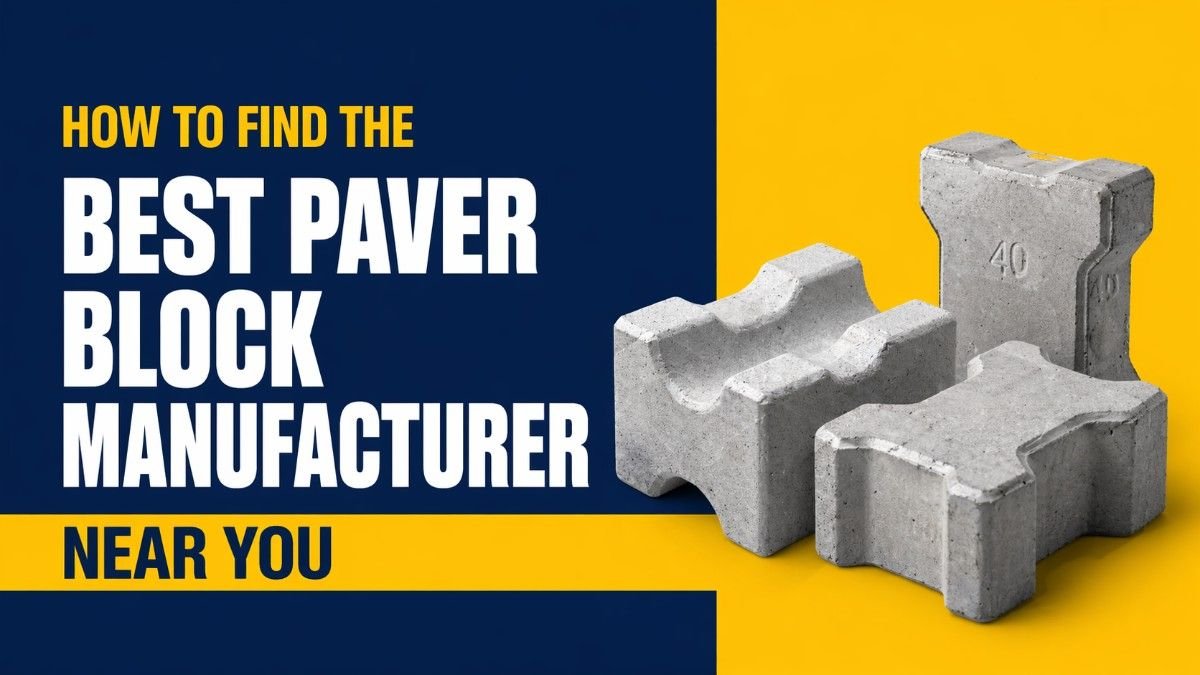
A well-established paver block manufacturer usually offers multiple product types including concrete paver blocks, precast concrete blocks, chequered tiles, and cover blocks for various construction applications.
This matters for two reasons. First, a wider range signals genuine manufacturing capability rather than simple trading. Second, if your project needs custom sizes, thicknesses, or colours, you want a manufacturer who can accommodate that without delays.
For example, if you are working on a highway project, you might need 80mm thick paver blocks. For a pedestrian plaza, 60mm is typically sufficient. For a garden pathway, 40mm works well. A good manufacturer guides you on the right specification rather than just selling you what they have in stock.
4. Evaluate Delivery Consistency and Lead Time
Delayed material supply can throw an entire construction schedule into chaos. Before committing to a manufacturer, ask these questions directly:
- What is the minimum order quantity?
- What is the standard lead time for a bulk order?
- Do they deliver to your project location?
- Can they guarantee delivery dates in writing?
A manufacturer who has been supplying to large infrastructure projects and institutional clients will already have a logistics system in place. That kind of operational reliability is what keeps your project on track.
5. Look at Their Client Portfolio
This is one of the most underrated ways to judge a paver block manufacturer. Ask who they have supplied to. If their client list includes reputed builders, government infrastructure projects, real estate developers, or industrial plants, that is a strong signal of consistent quality.
Companies do not keep reordering from a manufacturer unless the product and service both meet the mark.
Common Mistakes Builders Make When Sourcing Paver Blocks
Choosing purely on price: Cheaper blocks almost always mean reduced cement content, poor curing, or substandard raw aggregates. The money saved on material is usually spent twice over on repairs.
Not specifying the correct thickness: Using a 40mm block where a 60mm or 80mm block is structurally required leads to early failure, especially in areas with vehicular movement.
Ignoring dimensional consistency: Blocks with uneven sizing create visible gaps, uneven surfaces, and drainage problems. Always ask for dimensional tolerance details before ordering.
Skipping a sample order: For any large project, always request a sample lot first. Lay a small test area and observe it for a week before committing to the full quantity.
Ordering too close to the deadline: Paver blocks require curing time before dispatch. A good manufacturer will not ship under-cured blocks, which means you need to account for production and curing time in your schedule.
How Paver Block Tiles Connect to Broader Construction Quality
Here is something many people overlook. Paver blocks and concrete cover blocks are both part of the same quality conversation in construction.
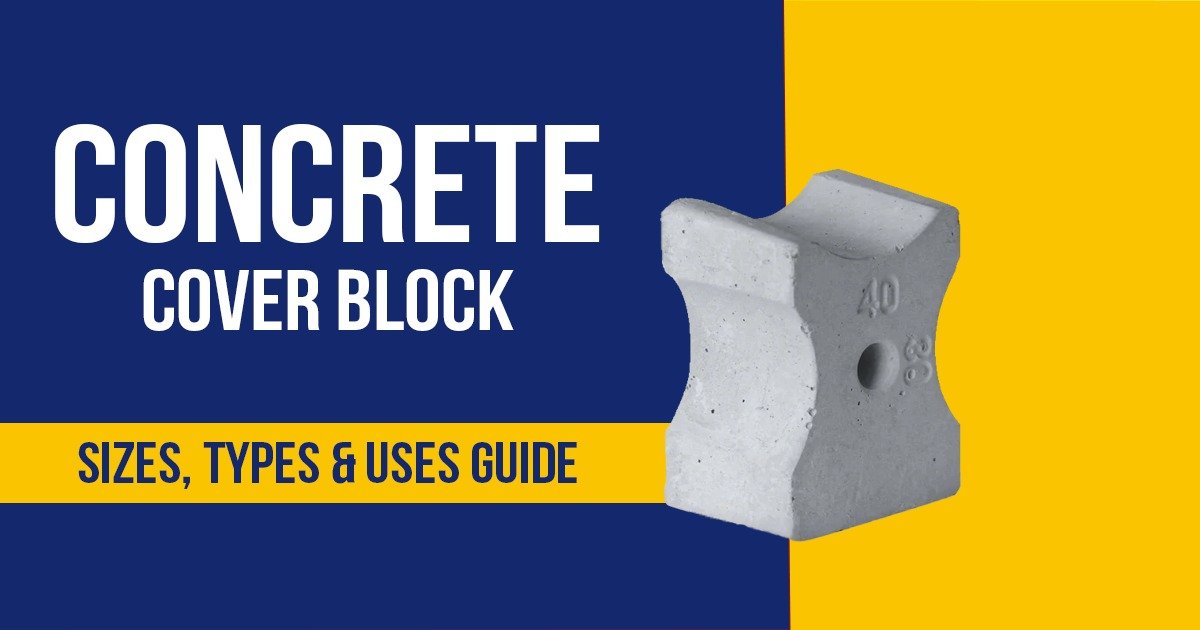
When a civil engineer designs a slab, column, beam, or footing, reinforcement bars need to be placed at a specific distance from the surface of the concrete. This distance, called the cover, is maintained using concrete cover blocks or cement cover blocks. Without proper cover blocks, the rebar sits too close to the surface and becomes vulnerable to corrosion over time.
Similarly, paver block tiles form the final hardscape surface on a project. Their quality determines the long-term appearance, safety, and structural integrity of walkways, driveways, parking zones, and public spaces.
A manufacturer who produces both products with high quality standards understands construction holistically. That is the kind of supplier worth building a long-term relationship with.
Why Goyal Cement Blocking is Trusted Across North India
Goyal Cement Blocking has been serving the construction industry for over 8 years from their facility in Hodal, Palwal, Haryana. What started as a focused manufacturing operation has grown into one of the most dependable names in concrete construction materials supply.
Their client portfolio speaks clearly. Projects handled by Larsen and Toubro, Tata Projects, Indian Oil, NCRTC, Afcons, NCC, and many state infrastructure bodies have relied on Goyal Cement Blocking for consistent product quality and reliable delivery.
What makes them stand out is not just the product range. It is the approach. Every batch of paver block tiles is produced with precise mix proportions, proper compressive strength, and dimensional accuracy that makes on-site installation smooth and professional.
Their product range covers:
- Concrete cover blocks in various sizes for slabs, columns, beams, and footings
- PVC cover blocks for precision reinforcement spacing
- Pilling blocks for foundation work
- Concrete chequered tiles for industrial and commercial flooring
- Paver tile blocks in multiple designs for outdoor spaces
- Precast concrete blocks for diverse structural applications
Whether you are a contractor handling a large commercial project or a builder sourcing materials for a residential complex, Goyal Cement Blocking offers the kind of supply reliability and product quality that protects your reputation on site.
Final Word: Your Material Choice is Your Project's Foundation
Every structure tells a story about the decisions made before the first brick was laid. The materials you choose, the suppliers you trust, and the quality checks you carry out before construction begins all show up in the final result.
Finding the right paver block manufacturer is not just a procurement task. It is a quality decision that affects the durability, appearance, and safety of your finished project for years to come.
Take the time to evaluate your options properly. Visit facilities, ask for test reports, check client references, and think beyond the immediate price. That extra effort at the sourcing stage saves enormous time, money, and stress during and after construction.
If you are looking for a paver block manufacturer who has already earned the trust of some of India's biggest infrastructure and construction companies, Goyal Cement Blocking is worth a direct conversation.
Contact Goyal Cement Blocking today and get the right product for your next project. Phone: +91 8307066683 Email: goyalcementblocking@gmail.com Location: Hodal, Palwal, Haryana, India
Frequently Asked Questions
Quick answers to what people usually ask.