
Picture This Scene on a Construction Site
It is 7 in the morning. A large infrastructure project is underway on the outskirts of a Tier 2 city in North India. The deadline is tight, the budget is fixed, and the site engineer is under pressure from all sides.
Forty workers are on site. But instead of mixing concrete in batches, waiting for it to cure, and hoping the on-site conditions do not affect the final strength, the team is working with precision. Pre-manufactured units are arriving on trucks, being checked against specifications, and going directly into the structure.
By noon, sections that would have taken three days of cast-in-place work are already complete.
What made this possible? Precast concrete blocks.
This is not a futuristic construction method. It is happening right now on projects across India, and the shift toward precast is accelerating faster than most people in the industry realise. This blog breaks down exactly why, and what it means for anyone involved in construction today.
The Core Idea: What Makes Precast Different
Before going into benefits and applications, it helps to understand what precast actually means in simple terms.
Traditional construction involves mixing concrete on site, pouring it into formwork, waiting for it to cure under site conditions, and then stripping the formwork and continuing. The entire process is weather-dependent, labour-intensive, and highly variable in terms of quality.
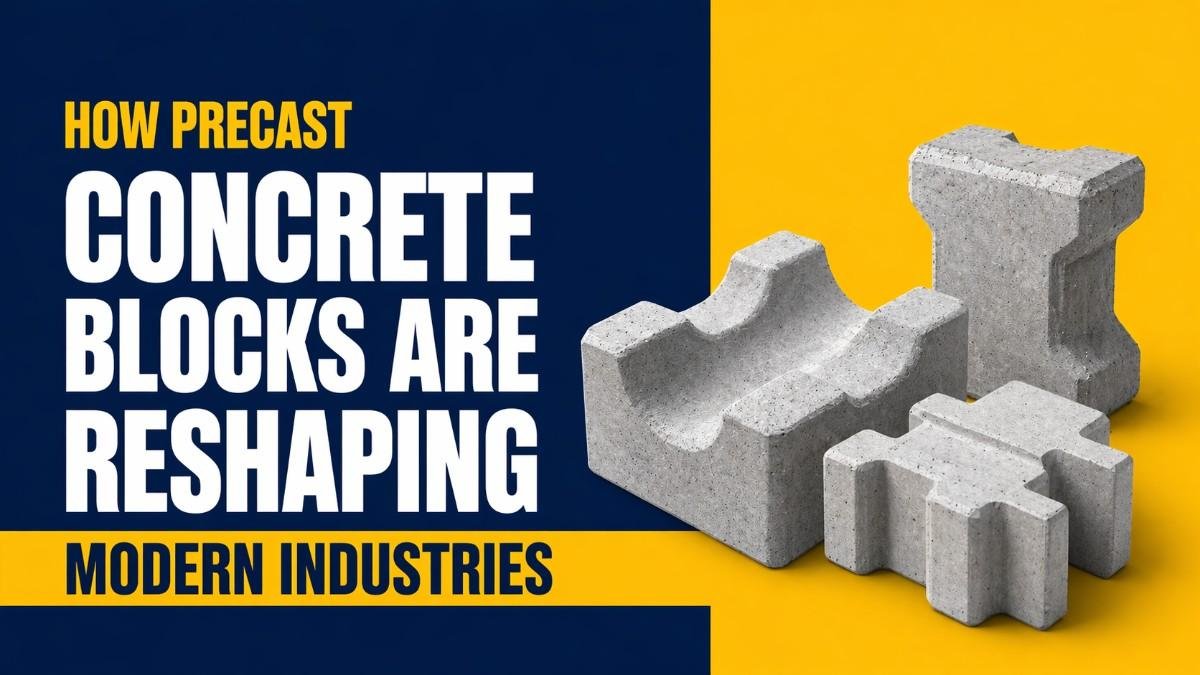
Precast concrete blocks are manufactured in a factory or dedicated production facility under controlled conditions. The mix design is precise. The compaction is mechanical. The curing is properly managed. The finished units are tested before they ever leave the facility.
When these blocks arrive on site, they are ready to use. No waiting for concrete to cure. No risk of quality variation due to rain, extreme heat, or inconsistent mixing. What you order is what you get, every single time.
That consistency is what the construction industry has been searching for, and it is exactly what precast delivers.
Why the Construction Industry Is Making the Switch
The shift toward precast concrete blocks is not driven by trends. It is driven by very practical, measurable advantages that show up on every project where they are used.
Speed That Actually Changes Project Timelines
In construction, time is money in the most literal sense. Labour costs accumulate daily. Equipment rentals run by the week. Penalties for project delays can be significant.
Precast blocks eliminate the time gaps that traditional construction creates. There is no waiting for poured concrete to reach sufficient strength before the next phase can begin. Structural elements, retaining walls, boundary work, and flooring surfaces can all progress simultaneously when precast units are part of the plan.
For a mid-sized residential project, switching to precast for select components can shave weeks off the construction schedule. For large infrastructure projects, the savings are even more significant.
Quality Control That On-Site Mixing Cannot Match
Here is a reality that most contractors know but rarely discuss openly. On-site concrete quality is inconsistent. Workers change. Water content varies. Mix proportions drift over the course of a long day. Temperature and humidity affect curing.
None of these variables exist in a controlled precast production environment. The same mix design, the same compaction pressure, the same curing protocol, applied to every single unit. This consistency shows up in the structural performance of the finished building.
Reduced Labour Dependency on Site
India is in the middle of a skilled labour availability challenge in construction. Fewer young workers are entering the trades. Experienced masons are retiring. Labour costs are rising steadily.
Precast concrete blocks reduce the skilled labour requirement on site. Less formwork means less carpentry. Less in-situ pouring means fewer concrete workers. The same project can be executed with a leaner site team, without compromising quality.
Waste Reduction and Better Site Management
On-site concrete production generates significant waste. Excess mix, spilled material, broken formwork, and off-cuts all accumulate. A busy construction site can feel completely chaotic.
Precast production minimises this. What is manufactured is manufactured to specification. Offcuts and rejects are handled at the factory level, not scattered across the project site. This makes the construction site cleaner, safer, and easier to manage.
Real-World Applications Across Construction Types
Understanding where precast concrete blocks are actually used helps clarify their value across different project types.
Residential Construction
In housing projects, precast blocks are used for compound walls and boundary structures, basement retaining elements, staircase components, garden landscape features, and external hardscape surfaces alongside paver block tiles.
The appeal for residential builders is straightforward. Faster construction with fewer quality surprises means fewer callbacks from homeowners and a better reputation in the market.
Commercial and Industrial Projects
Factories, warehouses, logistics parks, and commercial complexes rely heavily on precast construction for speed and structural consistency. Precast retaining walls, precast compound boundary panels, and precast flooring elements are standard in large industrial projects.
In industrial zones, where the floor has to carry heavy forklift and machinery loads, the combination of precast structural elements with precision-laid paver block tiles creates surfaces that hold up under the most demanding operating conditions.
Infrastructure and Government Projects
This is where precast construction has made the biggest impact in recent years. Road dividers, drainage channels, culvert components, metro station elements, footpath kerbing, and underpasses all increasingly use precast units manufactured off-site and assembled on location.
The efficiency advantage is enormous. Highway projects that previously required weeks of cast-in-place work can be completed in days when precast units are specified. This is why government infrastructure bodies and large construction companies have been systematically shifting to precast wherever specifications allow.
The Unsung Hero: How Concrete Cover Blocks Fit Into This Picture
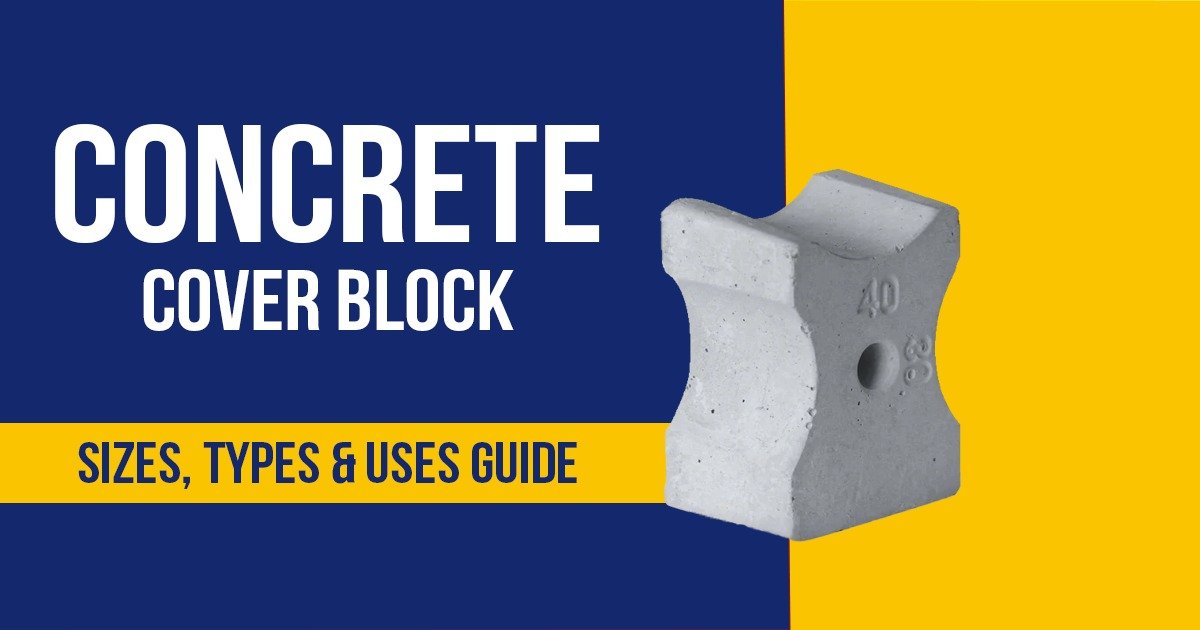
There is a product that works alongside precast concrete blocks in almost every RCC project, and it rarely gets the attention it deserves. That product is the concrete cover block, also called the cement cover block.
When steel reinforcement bars are placed inside a structure, whether it is a slab, column, beam, or footing, they must be held at a precise distance from the outer concrete surface. This distance is the reinforcement cover. It is specified by the structural engineer and mandated by IS codes for a very specific reason: it protects the steel from moisture, carbonation, and eventual corrosion.
Concrete cover blocks are the small precast units that maintain this cover accurately. They are placed beneath and around the rebar before concrete is poured, and they become permanently embedded in the structure.
Getting the cover wrong, even by 5 to 10mm, has long-term consequences. Inadequate cover leads to rebar corrosion, which causes concrete to crack and spall, weakening the structure over its service life. Excess cover wastes concrete and can affect the structural calculation.
The precision required to make cover blocks correctly is the same discipline that makes precast concrete blocks reliable. Exact dimensions. Correct mix design. Consistent compressive strength. A manufacturer who takes both products seriously demonstrates a genuine understanding of construction quality, not just a desire to move inventory.
Precast Concrete Blocks vs. Traditional Cast-in-Place: An Honest Comparison
This comparison comes up frequently, and the honest answer is that neither method is universally superior. The right choice depends on the project.
Where precast wins:
- Repetitive elements like boundary walls, flooring units, drainage components
- Tight project timelines where curing delays are not acceptable
- Sites where skilled labour availability is limited
- Projects where quality consistency is non-negotiable
Where cast-in-place has an edge:
- Complex structural shapes that cannot be practically precast
- Monolithic connections where seamless bonding is required
- Very large structural elements where transportation is impractical
- Remote sites where access for delivery vehicles is restricted
For most standard construction projects in India today, the smart approach is a combination of both. Use precast concrete blocks where the advantages are clear, and cast in place where the geometry or structural requirement demands it.
Goyal Cement Blocking: Eight Years of Getting This Right
Goyal Cement Blocking has been manufacturing high-quality construction materials from their facility in Hodal, Palwal, Haryana since the company was established. Over eight years, they have built a supply relationship with some of the most demanding clients in Indian construction.
Their precast product range includes concrete cover blocks for slabs, columns, beams, and footings, PVC cover blocks for precision reinforcement spacing, pilling blocks for foundation applications, concrete paver block tiles in multiple designs and thicknesses, concrete chequered tiles for industrial flooring, and precast concrete blocks for a range of structural and hardscape applications.
The client list tells its own story. Larsen and Toubro, Tata Projects, NCC, Afcons, Indian Oil, NCRTC, KEC International, ISGEC, Jindal University, and dozens of regional contractors and developers have sourced materials from Goyal Cement Blocking across projects of varying scale.
What keeps these relationships strong is not price alone. It is the fact that every batch of material meets the same standard. Dimensions are consistent. Compressive strength is verified. Delivery is reliable. When a contractor places an order with Goyal Cement Blocking, the material that arrives matches what was specified. That sounds basic, but in the Indian construction supply chain, it is rarer than it should be.
For any contractor, developer, or project manager looking for a precast concrete block supplier who understands what construction actually demands, Goyal Cement Blocking is worth a direct conversation.
The Bottom Line: Precast Is Not the Future. It Is the Present.
Construction in India is changing. Project timelines are getting tighter. Quality expectations are rising. Labour availability is becoming more challenging. Material costs are under constant scrutiny.
Precast concrete blocks address every one of these pressures simultaneously. They deliver speed without compromising quality, reduce on-site labour dependency, cut material waste, and produce measurable consistency in structural performance.
If your next project has any element where precast can be applied, the conversation is worth having. And if you need a manufacturer who has already proven their capability across some of India's most demanding construction projects, start with Goyal Cement Blocking.
Reach out to Goyal Cement Blocking today to discuss your project requirements. Phone: +91 8307066683 Email: goyalcementblocking@gmail.com Location: Hodal, Palwal, Haryana, India
Frequently Asked Questions
Quick answers to what people usually ask.