
Here is a number that should make every contractor pause.
According to structural engineers who conduct post-construction audits across Indian cities, inadequate reinforcement cover is among the top three causes of premature concrete deterioration in residential and commercial buildings.
Not poor cement quality. Not substandard steel. Not bad workmanship during the pour.
Inadequate cover. Maintained or not maintained by a product that costs a fraction of a rupee per unit.
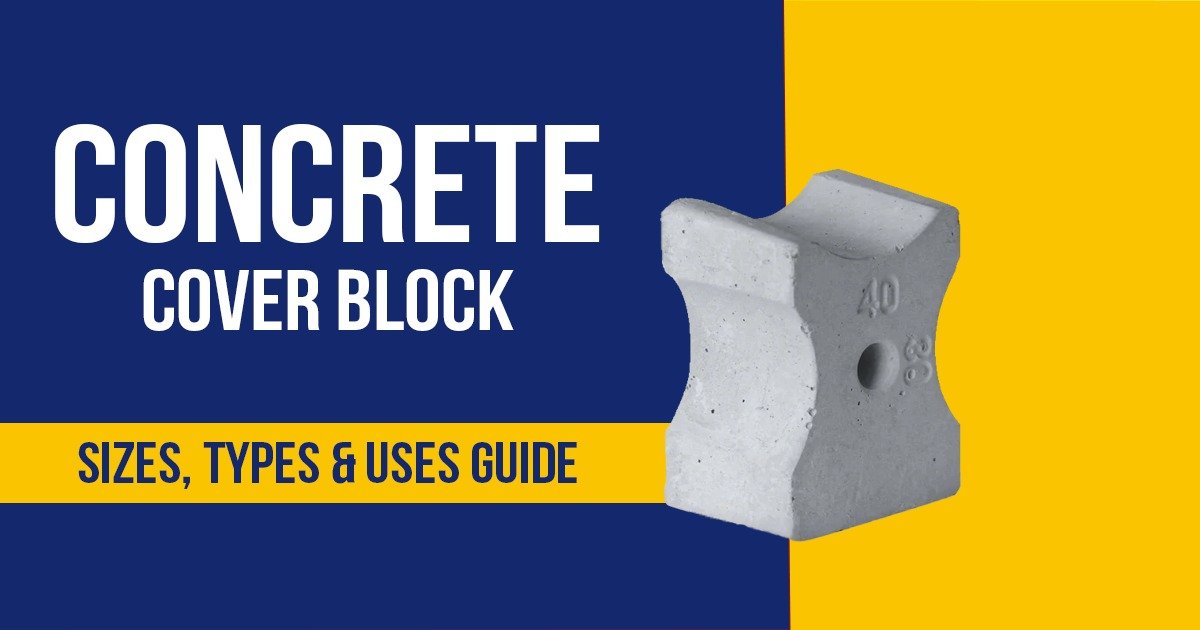
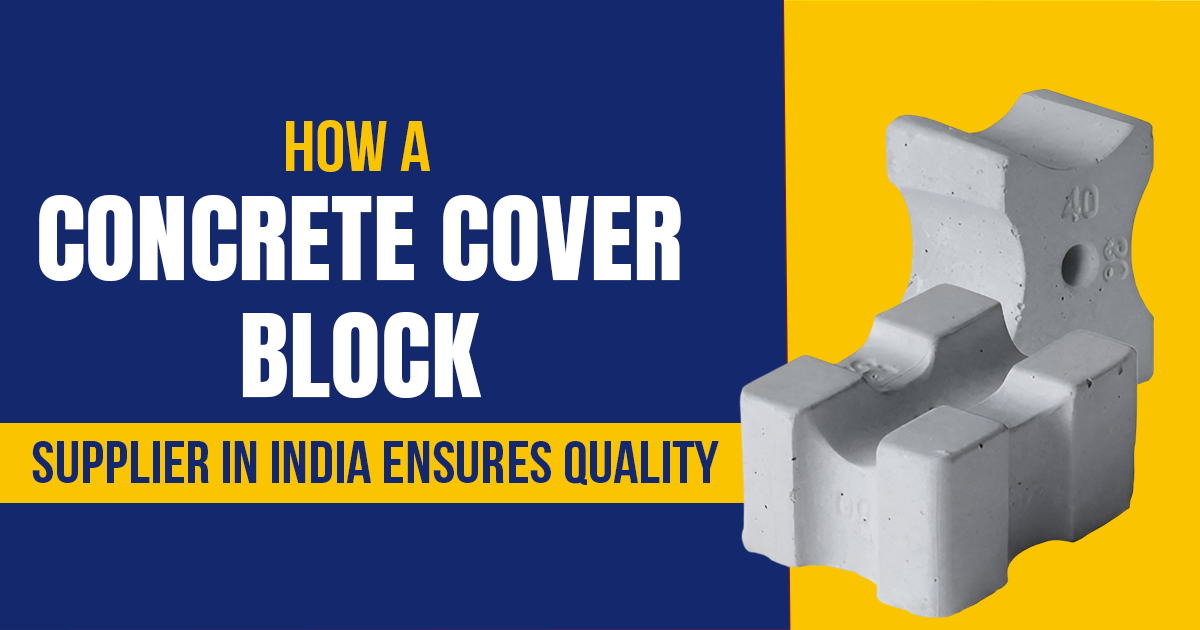
That product is the concrete cover block. And the entity responsible for whether it actually does its job is the concrete cover block supplier in India who manufactured and delivered it to the site.
This blog is about what separates a supplier who genuinely ensures quality from one who simply claims to.
Why Supplier Quality Is a Structural Matter, Not a Procurement Matter
Most procurement teams treat cover blocks the way they treat any low-cost consumable. Find a supplier, check the price, place the order, receive the stock. Done.
This approach works fine for items where a quality failure is visible immediately and correctable quickly. Cover blocks are neither of those things.
A cover block failure is invisible after the pour. It is correctable only through expensive and disruptive remediation. And the consequences, corrosion, spalling, structural weakening, show up years or decades after the project is complete.
This means the quality of the concrete cover block supplier in India you choose today is embedded permanently in the structures you build. There is no second chance after the concrete sets.
Understanding what quality actually looks like in a cover block supply operation is therefore not an academic exercise. It is a practical necessity for anyone responsible for structural outcomes.
What "Quality" Means for a Concrete Cover Block
The word quality gets used loosely in construction procurement. For concrete cover blocks specifically, quality has a precise meaning defined by three measurable parameters.
Dimensional accuracy: The block must measure exactly what it is labelled. A 40mm cover block must be 40mm when measured with a calliper. Tolerance of plus or minus one millimetre is the acceptable range for quality-grade cover blocks.
Compressive strength: The block must withstand the loads it encounters during construction without cracking, crumbling, or compressing significantly. This includes the weight of reinforcement cages, workers crossing the mesh, and the pressure of wet concrete during the pour.
Stability and integrity: The block must remain in position throughout the placing and vibration process. A block that tips or shifts when the concrete vibrator passes nearby provides no reliable cover at that point.
All three parameters must be met simultaneously. A block that is dimensionally accurate but weak will crack. A block that is strong but oversized will give more cover than specified, reducing the effective structural depth of the element. A block that is accurate and strong but poorly shaped will tip when the cage is placed on it.
A quality supplier engineers their product to meet all three requirements consistently, not just on good days or with fresh batches.
The Journey From Raw Material to Construction Site
Quality in a concrete cover block is not created at the end of the process. It is built into every stage. Here is what that journey looks like when a supplier is doing it right.
Stage One: Raw Material Sourcing and Incoming Checks
Concrete cover blocks are made from cement, fine aggregates, coarse aggregates, and water. Each of these inputs affects the final product's strength and dimensional stability.
Cement must be of a consistent grade from a reliable source. Variation in cement fineness or chemical composition from batch to batch creates variation in the final block strength even when every other variable is held constant.
Aggregates must be clean, properly graded, and free from clay, silt, and organic material. Contaminated aggregates weaken the cement paste bond and create localised weak points in the block that become cracking initiation sites under load.
Water must be clean and added in controlled quantities. This single variable, the water-cement ratio, has the most direct influence on compressive strength of any factor in the mix. Too much water and the strength drops significantly. A quality supplier measures water addition by weight, not by judgment.
A quality concrete cover block supplier in India does not simply accept whatever raw materials arrive. They have incoming material checks that verify cement grade, aggregate cleanliness, and grading before the material enters production.
Stage Two: Mix Design Control
A concrete cover block is a miniature structural element. It needs a designed mix just as a structural concrete pour does.
The mix design specifies the cement content, aggregate proportions, and water-cement ratio needed to achieve the target compressive strength for the block dimensions being produced. A quality supplier develops this mix design through trial mixes and material testing, not through guesswork or tradition.
More importantly, a quality supplier follows this mix design consistently on every production run. Proportions are measured by weight. Water addition is controlled. The mix design does not change because one material is temporarily cheaper or because the mixing team changed.
This consistency is what produces consistent strength across batches. Without it, the strength of cover blocks from the same supplier can vary dramatically between deliveries, making the product unreliable regardless of how well it performs on any given day.
Stage Three: Mould Precision and Maintenance
The dimension of a concrete cover block is set entirely by the mould used to cast it. A mould that is accurately made and well-maintained produces accurate blocks. A mould that has worn, distorted, or been repaired carelessly produces blocks with unpredictable dimensions.
Quality suppliers invest in moulds made from materials that hold their shape across thousands of production cycles. They have a maintenance schedule for checking mould dimensions and correcting wear before it introduces dimensional drift into the product.
They also pay attention to mould design details that affect block performance. A flat, stable base prevents tipping. Clean demoulding geometry ensures the block releases without damage to edges or corners. Consistent cavity depth across all positions in a multi-cavity mould ensures uniform dimensions across the entire batch.
These are engineering decisions that a quality supplier makes deliberately. A casual supplier uses whatever moulds they have until the blocks are noticeably wrong, by which point thousands of undersized or oversized units may already have been dispatched.
Stage Four: Casting and Compaction
After the mix is prepared, it must be placed in the moulds and compacted to remove air voids. Air voids in a concrete cover block reduce its effective cross-section and create stress concentrations that lead to premature cracking.
Quality suppliers use mechanical vibration or systematic tamping to compact each mould cavity before the surface is finished. This step adds little time or cost to the production process but has a significant effect on block density, strength, and surface quality.
A block with visible honeycombing or surface voids is not just aesthetically poor. It is structurally compromised at those points. Any contractor who receives cover blocks with visible surface defects should treat this as a warning sign about the quality of the internal structure as well.
Stage Five: Curing, The Step That Separates Serious Suppliers From Casual Ones
This is the stage where the difference between a quality supplier and a poor one is most clearly visible, and most consequential.
Concrete gains strength through the hydration of cement particles, a chemical reaction that requires both moisture and time. Without adequate curing, this reaction stops prematurely and the concrete never reaches its design strength.
For a concrete cover block, proper curing means maintaining moisture in the freshly demoulded block for a minimum period before it is stocked or dispatched. Seven days of moist curing achieves approximately seventy percent of the twenty-eight day design strength. Fourteen days achieves roughly eighty-five percent.
Many suppliers demould their blocks and stack them outdoors the same day. Without curing, these blocks may achieve only forty to fifty percent of the mix design's potential strength. They look identical to properly cured blocks. In the hand they feel solid. But under the loads of a construction site, they crack.
A quality concrete cover block supplier in India treats curing as a non-negotiable production step. The curing period is defined, documented, and followed on every batch. Blocks are not dispatched until they have completed their curing cycle.
Stage Six: Finished Product Verification
Even a supplier with excellent raw material control, a disciplined mix design, quality moulds, and proper curing should not simply trust the process without verifying the output.
Finished product verification involves two activities. Dimensional sampling checks that blocks from each production batch measure within the acceptable tolerance range for their labelled size. Strength spot-checking through periodic compressive testing confirms that the mix design is producing the intended results in the finished block.
Both activities require only basic equipment and a small time investment. But they provide the quality assurance that transforms a supplier's internal claims into external verifiable evidence.
A supplier who cannot tell you how they verify their finished product quality is a supplier whose quality claims cannot be trusted.
Real Site Consequences of Supplier Quality Failures
Theory becomes clearer through real examples. Here are three scenarios that play out regularly on Indian construction sites when cover block supplier quality is inadequate.
The undersized delivery: A contractor building a commercial complex orders 40mm cover blocks for columns in moderate exposure. The blocks arrive labelled 40mm but average 36mm due to worn moulds. The pour proceeds. A cover meter survey three months later reveals systematic under-cover across twelve columns on two floors. Remediation discussions begin. The structural consultant requires epoxy injection and surface treatment. The contractor absorbs the cost. The supplier is blacklisted.
The crumbling block: A housing project receives cover blocks that were demoulded and dispatched without curing. During reinforcement placement for a roof slab, blocks crack under the weight of workers crossing the mesh. Some failures are noticed and corrected. Others are not. After stripping, cover meter readings at several points show near-zero cover. The slab passes visual inspection. Five years later, rust staining appears on the soffit. The root cause is traced to the failed blocks.
The inconsistent batch: An infrastructure contractor uses a new supplier for bridge deck cover blocks. The first delivery is accurate. The second delivery, from a different production batch, varies between 46mm and 55mm for units labelled 50mm. The site engineer rejects the batch. Procurement scrambles for alternative supply. The pour is delayed by four days. The project programme absorbs the impact, but the supplier relationship ends permanently.
How Goyal Cement Blocking Ensures Quality Across Every Batch
Goyal Cement Blocking approaches quality as a production standard rather than a marketing position. Every stage of the process described above is implemented in practice, not just on paper.
Raw materials are sourced consistently and checked on receipt. The mix design is documented, fixed, and followed on every production run without variation based on material cost or convenience. Moulds are maintained to dimensional specifications and replaced when wear introduces drift outside acceptable tolerances.
Curing is treated as a structural requirement. Goyal blocks complete a defined moisture curing cycle before they are stocked or dispatched. The compressive strength the mix design targets is the strength the finished block achieves.
Finished blocks are sampled dimensionally before dispatch. A 25mm Goyal cover block measures 25mm. A 50mm block measures 50mm. This is not an aspiration. It is a production standard verified on every batch.
For large projects requiring phased supply across multiple pours and multiple structural elements, Goyal's production capacity and logistics operation support consistent delivery without shortfalls or substitutions.
Contractors who work with Goyal describe the experience in practical terms. The blocks arrive on time, they are the right size, they do not crack during placement, and there are no cover-related quality failures at audit. That is what a quality supply relationship looks like in practice.
The Supplier Behind Every Safe Structure
A concrete cover block supplier in India who takes quality seriously is not just selling a product. They are contributing to the structural safety and durability of every building their product goes into.
That responsibility deserves to be taken seriously at every stage of production, from raw material sourcing to finished product verification, from mix design control to curing discipline, from mould maintenance to dimensional sampling.
Goyal Cement Blocking has built its reputation by taking that responsibility seriously, consistently, across every batch and every project.
If you are planning a project and want a cover block supply partner who delivers accurate dimensions, consistent strength, and reliable availability, the conversation starts with Goyal Cement Blocking.
Because in construction, what is inside the concrete is permanent. Make sure what is inside was supplied by someone who cared enough to get it right.
Frequently Asked Questions
Quick answers to what people usually ask.