
Walk into any quality audit on a large construction site in India and watch what the inspector does first.
They do not check the cement bags. They do not pull out the steel test reports. They walk to the nearest exposed structural element and press a cover meter against the concrete surface.
That device tells them one thing: how far the reinforcement is from the outer face of the concrete. And that single measurement, taken at dozens of points across slabs, columns, and beams, tells them more about the long-term safety of the structure than almost any other check.
What determines whether that reading comes back correct? Not the pour team. Not the structural engineer. Not even the site supervisor who was watching.
It comes down to whether the cement cover block manufacturer who supplied the spacers on that project built a product that actually did its job.
The Gap Between "Available" and "Reliable"
India has hundreds of cover block manufacturers. In almost every city and district with active construction, someone is making cement cover blocks in some form. They are available everywhere.
But available and reliable are two very different things.
The cover block market in India has a quality problem that does not get discussed enough. Because cover blocks are cheap, embedded permanently in concrete, and never visible after the pour, the consequences of poor quality are delayed. Sometimes by years. Sometimes by decades.
By the time rust stains appear on a column face or a slab soffit starts to spall, the project is long completed, the contractor has moved on, and the cover blocks that failed have been encased in concrete for years. Nobody connects the structural deterioration back to the manufacturer who supplied undersized, under-strength spacers during construction.
This delay between cause and consequence is exactly what allows low-quality manufacturers to stay in business. The feedback loop is too slow and too indirect for the market to correct itself quickly.
Which is precisely why understanding what separates a quality cement cover block manufacturer from a careless one matters so much to anyone making procurement decisions today.
Starting From First Principles: What a Cover Block Must Actually Do
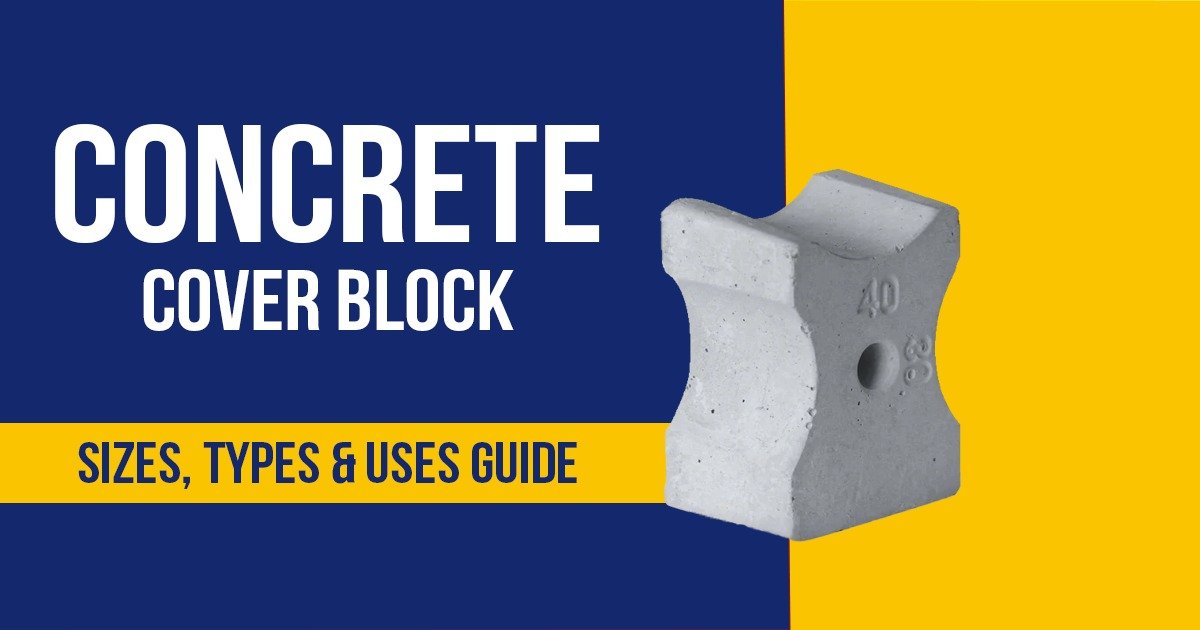
Before examining quality controls, it helps to be clear about what a cement cover block is required to do on a construction site. Because every quality requirement flows from these functional demands.
A cover block must do four things simultaneously and without failure:
First, it must hold the reinforcement bar at exactly the specified distance from the formwork or soil surface. Not approximately. Not roughly. Exactly, within a tolerance of one millimetre in either direction.
Second, it must bear the weight of the reinforcement placed above it without cracking, crumbling, or compressing significantly. Depending on the element, this can mean supporting a heavy reinforcement cage, workers walking on the mesh, and the initial weight of wet concrete during the pour.
Third, it must remain stable and in position throughout the concrete placing and vibration process. A block that tips over when the vibrator passes nearby is worse than no block at all, because it creates a false sense that cover is being maintained.
Fourth, it must bond with or at minimum not interfere with the concrete surrounding it after the pour. The block becomes a permanent part of the structure, and its presence should not create a weak plane or a moisture pathway.
A manufacturer who designs their production process around these four functional requirements builds a genuinely useful product. A manufacturer who designs their process around minimising material cost produces something that looks like a cover block but may not reliably function as one.
Inside the Production Process: Where Quality Is Made or Lost
Raw Material Selection Sets the Ceiling
Every concrete product is limited by the quality of its raw materials. Cement cover blocks are no different.
The cement used must be of a consistent grade and from a reliable source. Variation in cement quality from batch to batch creates variation in the final block strength, even if every other variable is held constant.
Aggregates must be clean, well-graded, and free from clay, silt, and organic contamination. Dirty aggregates weaken the cement paste bond and reduce compressive strength. In a product as small as a cover block, contaminated aggregates can create localised weak zones that lead to cracking under minimal load.
Water quality and quantity matter enormously. Excess water in the mix increases workability but dramatically reduces strength. A mix that is too wet produces blocks that look fine but have compressive strength well below the target.
A quality manufacturer sources raw materials consistently, tests them regularly, and does not substitute materials based on short-term availability or cost pressure.
Mix Design Control Is Non-Negotiable
A cement cover block is a miniature concrete element. It needs a mix design just as a structural concrete pour does.
That mix design specifies the cement content, aggregate grading, water-cement ratio, and any admixtures needed to achieve the target compressive strength and workability for the block dimensions being cast.
The difference between a quality manufacturer and a casual one is visible here in a very practical way. A quality manufacturer has a written mix design that is followed on every production run. Proportions are measured by weight, not by shovel count or visual estimate. The water addition is controlled, not left to the judgment of whoever is mixing that day.
This sounds basic. In practice, it is the single biggest factor separating cover blocks that perform from cover blocks that fail.
Mould Quality Determines Dimensional Accuracy
This is the point in the process where the specified cover thickness is either reliably delivered or quietly compromised.
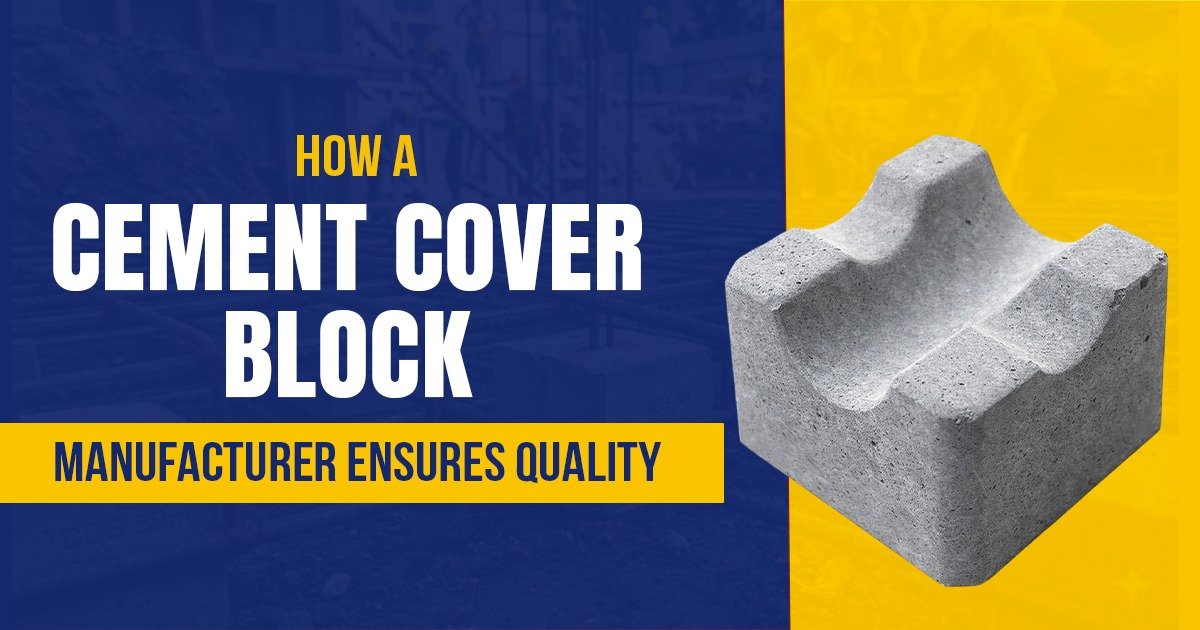
Cover block moulds must be dimensionally accurate and must remain so across their working life. A new steel mould for a 40mm cover block produces accurate blocks. A worn mould, or a mould made from low-quality materials that deform over time, produces blocks that might be anywhere from 36mm to 44mm depending on which cavity they came from and how worn that cavity is.
Quality manufacturers invest in proper moulds made from materials that hold their dimensions under repeated use. They have a mould maintenance schedule. They check mould dimensions periodically and retire moulds that have drifted outside acceptable tolerances.
They also design their moulds thoughtfully. A flat, stable base. Clean demoulding geometry that does not require excessive force to release the block. Consistent cavity depth across all positions in a multi-cavity mould.
None of this is technically complex. But it requires investment and attention that a manufacturer focused purely on unit cost will not make.
Compaction and Finishing
After the mix is placed in the mould, proper compaction removes air voids and ensures full contact between the mix and the mould surfaces. Air voids in a cover block reduce its effective cross-section and create stress concentrations that lead to cracking.
Quality manufacturers use mechanical vibration or tamping to compact the mix in each mould cavity before the surface is finished. This step is quick and adds little to production cost, but it has a significant effect on the final block's strength and surface quality.
A cover block with voids and honeycombing on its surface is not just aesthetically poor. It is weaker and more susceptible to cracking under site loads.
Curing: The Most Frequently Skipped Quality Step
Concrete gains strength through the continued hydration of cement particles. This process requires moisture and time. Without adequate curing, hydration stops prematurely, and the concrete never reaches its design strength.
For cover blocks, proper curing means maintaining moisture in the freshly demoulded blocks for a minimum period before they are stocked and dispatched. Moist curing for seven days achieves roughly seventy percent of the twenty-eight day strength. Moist curing for twenty-eight days achieves near-full design strength.
Many small manufacturers demould their blocks and stack them in the sun the same day. Without any curing, the blocks may achieve only forty to fifty percent of their design strength. They look identical to properly cured blocks. They are not.
When a contractor places one of these under-cured blocks beneath a heavy reinforcement cage, the block cracks. Cover is lost. The structural engineer never knows.
A quality manufacturer treats curing as mandatory, not optional.
The Verification Layer: Checking What Was Produced
Even a manufacturer with good raw materials, a controlled mix design, quality moulds, and proper curing should not simply trust the process. They should verify the output.
Finished block quality verification has two components.
Dimensional checking involves measuring sampled blocks from each production batch against the specified dimension. This is done with callipers or dedicated gauges. Any batch where the sampled blocks fall outside the tolerance range, typically plus or minus one millimetre for standard sizes, should be rejected or regraded to a different size specification.
Strength spot-checking involves periodic compressive strength testing of sample blocks. This does not need to happen on every batch, but regular testing confirms that the mix design is being followed and that the curing process is producing the intended results.
Manufacturers who skip verification rely entirely on their process never varying. Processes always vary. Verification catches the variation before it reaches the construction site.
Goyal Cement Blocking: Quality as a Production Standard
Goyal Cement Blocking approaches quality not as a marketing claim but as a production standard built into every stage of the manufacturing process.
The mix design is fixed, documented, and followed consistently. Raw materials are sourced from reliable suppliers and checked on receipt. Moulds are maintained to dimensional specifications, and finished blocks are sampled and measured before dispatch.
Curing is treated as a structural requirement. Goyal blocks go through a controlled moisture curing process before they are stocked, which means the compressive strength the mix design targets is the strength contractors get on site.
Builders and contractors who have worked with Goyal across multiple projects describe the same experience repeatedly. The dimensions are accurate. The blocks do not crack during cage placement or vibration. And the supply is consistent, which means there are no last-minute shortages that force compromises during active pours.
This reliability is what builds long-term relationships with quality-conscious contractors who understand that what goes inside the concrete matters as much as what is visible on the surface.
Questions Worth Asking Before You Choose a Manufacturer
If you are evaluating a cement cover block manufacturer for your next project, these questions separate serious producers from casual ones.
Can you share your mix design and target compressive strength?
How do you control water content in your mixing process?
What is your mould maintenance schedule and how do you verify dimensional accuracy?
What curing process do your blocks go through before dispatch?
How do you handle a batch that fails quality checks?
A manufacturer with robust quality controls has clear, specific answers to every one of these. A manufacturer without them will give you reassurances instead of information.
The Manufacturer Behind the Block Behind the Structure
Every durable building stands on thousands of small decisions made correctly. The cement cover block manufacturer is responsible for one of those decisions, a small one in physical terms, but enormous in structural consequence.
When that manufacturer takes quality seriously, the reinforcement in your slabs, columns, beams, and footings sits exactly where the engineer placed it, protected for the design life of the structure.
When they do not, the failure is quiet, slow, and expensive.
Goyal Cement Blocking has built its reputation on getting this right, consistently, across every batch and every project. If your next project deserves cover blocks that perform as specified, that conversation starts with Goyal.
Frequently Asked Questions
Quick answers to what people usually ask.