

A True Story from a Building Site
Let me tell you about a house in Lucknow. Beautiful design. Good quality cement. Strong steel. The owner spent a lot of money. But two years after moving in, cracks appeared on the ceiling. Water leaked through the roof. Rust stains showed up.
What went wrong? The steel was too close to the surface. Why? Because the contractor did not use proper cover blocks. He used broken tiles instead. Some tiles were too thin. Some tilted during casting. The cover was never correct.
This happens every day across India. And it is completely avoidable.
The solution is simple. A proper cover block for slab. A small concrete piece that holds the steel at the right height. It costs almost nothing compared to the rest of the building. But without it, the entire slab becomes weak.
Goyal Cement Blocking has been manufacturing quality cover blocks for eight years. In this guide, we will answer every question you have about slab cover blocks. No complicated language. Just practical information you can use on your next project.
First. What Exactly Is a Cover Block for Slab?
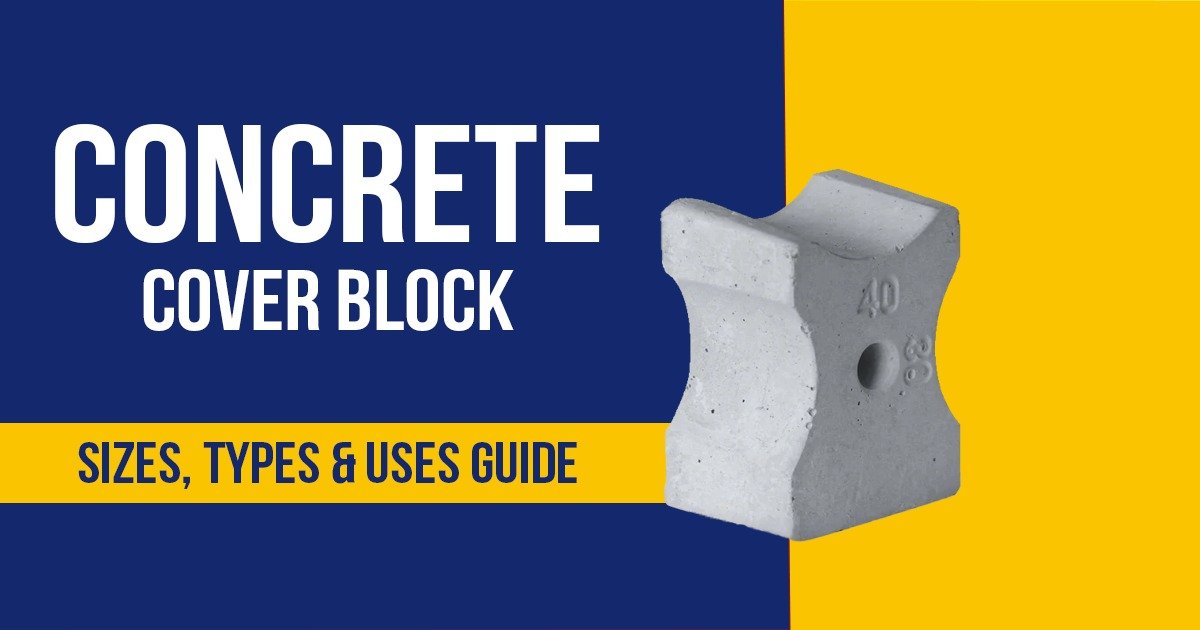
A cover block for slab is a small precast concrete spacer. It is placed between the reinforcement bar and the formwork (the wooden or steel sheet below the slab).
Its job is to maintain a fixed gap. That gap is called cover. The cover protects the steel from moisture, oxygen, and corrosion.
Without cover blocks, the steel could touch the formwork. Or it could sink lower than intended. Either way, the steel ends up too close to the slab surface. And that leads to rust, cracks, and failure.
A good cover block for slab is made of high strength concrete. It is strong enough to hold the weight of the steel mesh without crushing. It is also the exact height specified in the structural drawing.
Why Slabs Need Cover Blocks More Than You Think
Many people think cover blocks are only for columns or beams. That is wrong.
Slabs are horizontal. They carry live loads like furniture, people, and equipment. They also face weather, water, and temperature changes. The top surface may get wet from rain. The bottom surface may face moisture from the room below.
If the steel is too close to the surface, moisture reaches it. Rust starts. Rust expands. The concrete cracks and falls off. This is called spalling.
A proper cover block for slab prevents this. It keeps the steel safely inside the concrete, away from the outside world.
Types of Cover Blocks for Slab
Not all cover blocks are the same. Different slabs need different types.
Bottom Cover Block for Slab
This is the most common type. It sits under the bottom layer of reinforcement. It lifts the steel off the formwork. These blocks are usually square or rectangular. They have a flat base for stability.
Top Cover Block for Slab
In double layered slabs (thick slabs or two way slabs), there is a top layer of steel. Top cover blocks sit above the top layer. They maintain cover from the top surface. These blocks are often smaller and sometimes have wire ties.
Wheel Type Cover Block
Some manufacturers make round or wheel shaped blocks. They are easier to roll under the steel mesh. But they can tilt. Square blocks are generally more stable.
Bar Type Cover Block
These are long, narrow blocks used for beam bottom cover. Not commonly used for slabs.
For most residential and commercial slabs, square or rectangular blocks work perfectly. Goyal Cement Blocking manufactures stable, flat bottom cover blocks that do not tilt during casting.
Correct Thickness of Cover Block for Slab
This is the most common question. How thick should the cover be?
The answer depends on several factors.
Exposure Condition
Mild exposure (normal indoor conditions) 15mm to 20mm
Moderate exposure (covered but humid) 20mm to 25mm
Severe exposure (rain, moisture, coastal) 25mm to 30mm
Very severe or extreme 30mm to 50mm
Type of Slab
Residential roof slab 15mm to 20mm
Commercial slab 20mm to 25mm
Industrial slab 25mm to 30mm
Slab on ground (directly on soil) 30mm to 50mm
Parking slab (exposed to weather) 25mm to 30mm
Always follow the structural drawing. The engineer calculates the exact cover needed for your specific building. Do not guess.
A reliable cover block for slab supplier like Goyal Cement Blocking offers multiple thickness options. You can get exactly what your drawing specifies.
How to Place Cover Blocks for Slab Correctly
Placement is as important as the block itself. Even the best blocks will fail if placed incorrectly.
Step by Step Guide
Step 1. Clean the formwork surface. Remove dust, oil, and debris.
Step 2. Place the cover blocks on the formwork before laying the steel. Space them at regular intervals.
Step 3. The standard spacing is one block per square meter. For heavy reinforcement, increase to two blocks per square meter.
Step 4. Place blocks under every intersection of main and distribution bars. This provides maximum support.
Step 5. Ensure the block sits flat on the formwork. No tilting.
Step 6. After placing the steel, check that every bar rests on a cover block. No bar should touch the formwork.
Step 7. For double layered slabs, place top cover blocks after the top steel is laid. Tie them with wire if needed.
Step 8. Before pouring concrete, walk through and check again. Adjust any displaced blocks.
Common Placement Mistakes
Mistake 1. Placing too few blocks. The steel sags between blocks.
Mistake 2. Placing blocks only under main bars, not at intersections.
Mistake 3. Using blocks of mixed thickness. Some steel gets wrong cover.
Mistake 4. Not checking after workers walk on the steel. Blocks get kicked out of position.
Avoid these mistakes. Your cover block for slab will work perfectly.
What Happens When You Use the Wrong Cover Block for Slab
Let me paint three scenarios.
Scenario 1. Cover Too Thin
The drawing says 20mm. The block measures 15mm. The steel is 5mm too close to the surface.
After one monsoon, tiny rust spots appear on the ceiling. After two years, the rust expands. Cracks form. Pieces of concrete fall off. The ceiling looks terrible. And the slab is weaker than designed.
Scenario 2. Cover Too Thick
The drawing says 20mm. The block measures 25mm. The steel is 5mm lower than intended.
This reduces the effective depth of the slab. The slab becomes weaker for bending. It may sag more than expected. Cracks may appear on the top surface under load.
Scenario 3. Weak Block That Crushes
The block looks fine when placed. But when the concrete is poured and vibrated, the block crushes. The steel sinks to the formwork.
Now you have almost zero cover on some bars. Rust will start within months. The slab will fail prematurely.
All three scenarios are common on Indian sites. All three are avoidable. Choose a strong, accurate cover block for slab from a trusted manufacturer.
How to Check Quality of Cover Block for Slab on Site
You do not need a laboratory to check basic quality. Here are simple tests.
The Drop Test
Take a cover block. Drop it from one meter height onto a hard concrete floor.
What happens next tells you everything.
A good block stays intact. It may crack slightly but holds together.
A poor block shatters into many pieces. That block will crush inside your slab.
The Scratch Test
Take a nail or a key. Scratch the surface of the block.
A quality block resists scratching. The surface is hard.
A weak block shows deep scratches. The surface is soft like chalk.
The Weight Test
Pick up the block. Feel its weight.
A dense block feels heavy for its size. A porous block feels light. Light blocks float in concrete. Avoid them.
The Size Test
Take a measuring scale. Measure the thickness at multiple points.
A good block has uniform thickness. All sides match.
A poor block varies. One side 20mm. Another side 18mm. This will give uneven cover.
Goyal Cement Blocking passes all these tests. Their blocks are strong, dense, and accurate.
Cover Block for Slab vs Other Methods
Some builders use alternatives to cover blocks. Let us compare.
Broken Tiles
Pros. Cheap and available.
Cons. Uneven thickness. Sharp edges can damage formwork. No strength guarantee. Tiles tilt easily. Not reliable.
Verdict. Never use for structural slabs.
Stones or Pebbles
Pros. Free if found on site.
Cons. Irregular shape. No flat base. Roll away. Cannot guarantee cover thickness.
Verdict. Unsafe. Do not use.
Plastic Chairs
Pros. Lightweight. Consistent size.
Cons. Can be brittle. May not bond well with concrete. Expensive compared to concrete blocks.
Verdict. Acceptable for some applications but concrete blocks are more traditional and bond better.
Proper Concrete Cover Block
Pros. Same material as the slab. Bonds perfectly. Strong. Durable. Accurate sizing. Cost effective.
Cons. Requires quality manufacturing.
Verdict. The best choice. Always use a proper cover block for slab.
Real Site Examples from Goyal Cement Blocking
Over eight years, Goyal Cement Blocking has supplied cover blocks for hundreds of slab projects. Here are two examples.
Example 1. Residential Apartment Slabs in Noida
The builder needed 20mm cover blocks for multiple floor slabs. They had previously used low quality blocks that crushed during vibration.
Goyal Cement Blocking supplied high strength blocks with accurate dimensions. The site engineer reported zero crushing during concreting. The slabs showed no cover related defects after curing.
Example 2. Commercial Building Slabs in Gujarat
The project required 25mm cover blocks for severe exposure. The steel mesh was heavy. Weak blocks would have failed.
Goyal Cement Blocking provided dense, high strength blocks that held the steel perfectly. The contractor saved time because they did not need to replace crushed blocks.
These are not special cases. This is what happens when you choose quality.
Common Problems and Solutions for Slab Cover Blocks
Problem. Blocks tilt during concreting.
Why? The block has a curved or uneven bottom. Or the formwork is slippery.
Solution. Use flat bottom blocks. Roughen the formwork surface slightly or use a thin sand layer.
Problem. Blocks break under worker footsteps.
Why. Workers walk on the steel before concreting. Weak blocks cannot take point load.
Solution. Use higher strength blocks. Or ask workers to walk on wooden planks placed over the steel.
Problem. Blocks float up in the concrete.
Why. The block is too light or porous. Air inside makes it buoyant.
Solution. Use dense, fully compacted blocks. Goyal Cement Blocking blocks are solid and do not float.
Problem. The cover block is not visible after concrete pour.
How to check cover after casting? Use a cover meter. It is a device that measures concrete cover thickness without damaging the slab. Every serious contractor should have one.
Cost Effectiveness of Using Proper Cover Blocks
Some contractors avoid buying proper cover blocks to save money. This is false economy.
Let us do simple math.
A cheap broken tile costs nothing. But it gives uneven cover. The slab may develop cracks in two years. Repairing a cracked slab costs thousands of rupees. In some cases, the slab needs complete replacement.
A proper cover block for slab costs a few rupees each. A typical residential slab needs 300 to 500 blocks. Total cost is minimal compared to the overall project cost.
Spending a small amount on cover blocks saves a large amount on repairs. It also gives peace of mind. You know your slab will last.
Goyal Cement Blocking offers affordable, high quality cover blocks. The small upfront investment pays back many times over.
Why Choose Goyal Cement Blocking for Cover Block for Slab
Goyal Cement Blocking is not just another manufacturer. They are a trusted name in construction materials for eight years.
What Makes Them Different
Accurate Sizing. Every block matches the ordered dimension. No guesswork. No surprises.
High Strength. Their blocks are made with the right mix design and proper curing. They do not crush under vibration or heavy steel.
Dense Composition. No porosity. No floating. Blocks stay where you place them.
Wide Range. They offer multiple thickness options from 15mm to 50mm. Whatever your drawing specifies, they have it.
Reliable Supply. They maintain inventory. Your work does not stop waiting for blocks.
Beyond cover blocks, they also manufacture paver blocks and chequered tiles. One trusted source for multiple construction needs.
Builders who choose Goyal Cement Blocking report smoother slab casting, fewer defects, and lower long term costs.
A Quick Checklist Before Your Next Slab Casting
Use this checklist on your site.
-
Do you have the correct thickness cover blocks as per drawing?
-
Have you tested a few blocks for strength (drop test)?
-
Are the blocks placed at proper spacing (one per square meter)?
-
Is every bar intersection resting on a block?
-
Are the blocks sitting flat without tilting?
-
Has any block been displaced by workers walking?
-
Do you have extra blocks in case some break?
-
Is the formwork clean and ready?
If you answered yes to all, you are ready for casting.
If you answered no to any, fix it before pouring concrete.
Final Words. Do Not Ignore the Small Block
A cover block for slab is small. It costs little. It takes seconds to place. But its importance is enormous.
Without it, your slab is vulnerable. Rust will come. Cracks will come. Expensive repairs will come.
With it, your slab stays strong for decades. The steel remains protected. The concrete stays intact. Your building remains safe.
Do not take shortcuts. Do not use broken tiles or stones. Do not buy cheap, weak blocks from unknown sources.
Choose a trusted cover block for slab from a reliable manufacturer.
Goyal Cement Blocking has been helping builders build right for eight years. Their cover blocks are strong, accurate, and durable. Used in slabs across India. Trusted by engineers and contractors.
Your next slab deserves the best. Give it the protection it needs.
Ready to cast your slab with confidence? Contact Goyal Cement Blocking today. Get high quality cover blocks for slab, plus paver blocks and chequered tiles. Build strong. Build smart. Build with Goyal.
Frequently Asked Questions
Quick answers to what people usually ask.