
Fact Check: Do You Know What Is Underneath That Perfectly Laid Driveway?
Walk past any well-built commercial complex, government building, or housing society in India and there is a good chance the pathway, parking lot, or outdoor flooring beneath your feet is made of concrete paver blocks.
They are everywhere. Yet most people, including many first-time builders and homeowners, have only a surface-level understanding of what these blocks actually are, how they perform, and what separates a good batch from a bad one.
That gap in knowledge costs people money. It causes project delays. And in some cases, it leads to complete re-laying of surfaces within just two to three years of installation.
This blog covers everything that actually matters about concrete paver blocks. By the end of it, you will know exactly what to look for, where they work best, and how to make the right sourcing decision for your project.
So What Exactly Are Concrete Paver Blocks?
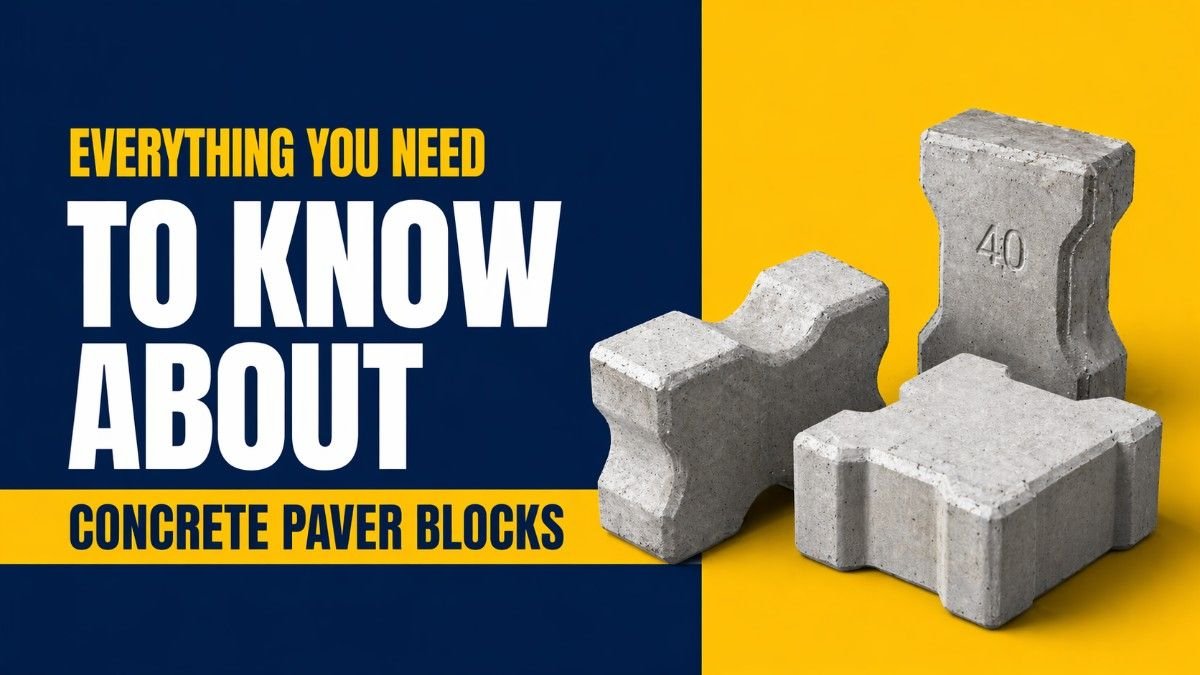
At their simplest, concrete paver blocks are precast units made from a mix of cement, fine aggregates, coarse aggregates, and water. They are cast in moulds, compacted under hydraulic pressure, and then cured to achieve the required strength before being dispatched for use.
Unlike cast-in-place concrete, paver blocks are manufactured in a controlled environment. This gives them consistent shape, density, and finish that is very difficult to achieve with on-site concrete pouring.
They are not the same as bricks. Bricks are clay-based and fired in kilns. Paver blocks are cement-based and cured with water or steam. The difference matters in terms of compressive strength, water resistance, and load-bearing performance.
In India, concrete paver blocks are manufactured as per IS 15658, which sets standards for dimensions, compressive strength, water absorption, and abrasion resistance.
The Real Reason Builders Prefer Them Over Other Surfaces
Here is a question worth thinking about. If plain concrete works fine for roads and floors, why do so many engineers and contractors specifically choose paver blocks instead?
The answer comes down to four practical advantages that show up on every real construction project.
Flexibility and Replaceability
A plain concrete floor or road, once laid, is difficult and expensive to repair. If a utility line needs to be accessed underneath, the entire slab has to be broken and re-poured. With concrete paver blocks, individual units can be lifted, the work done below, and the same blocks relaid. No patching. No ugly repair marks.
Drainage Control
Properly laid paver blocks with sand joints allow water to percolate through the gaps between units. This reduces surface runoff, prevents waterlogging, and helps manage rainwater more effectively. For projects in areas with heavy monsoon rainfall, this is a significant functional advantage.
Surface Stability Under Load
Because paver blocks distribute load across a larger surface area and transfer stress through the interlocking or sand-filled joints, they handle point loads and dynamic loads better than thin screeded concrete surfaces in many applications.
Faster Installation and Resumption
A paver block surface can be opened to traffic or foot use almost immediately after laying, since there is no curing period required on-site. This matters tremendously on commercial projects where downtime has a direct cost.
Where Concrete Paver Blocks Are Used Across Construction Projects
This is where the practical construction knowledge matters most. Not every paver block is suitable for every application. The type, thickness, and design you choose should match the specific use case.
Residential Projects
In housing projects, concrete paver blocks are commonly used for:
- Driveway surfaces from the gate to the parking area
- Garden walkways and landscape pathways
- Rooftop terraces where a finished floor surface is needed
- Compound boundary flooring around the building perimeter
For most residential applications, 60mm thickness is the standard recommendation. For purely decorative garden paths with no vehicle movement, 40mm works fine.
Commercial and Institutional Projects
Shopping complexes, hospitals, schools, corporate campuses, and hotels use paver blocks extensively for:
- External pedestrian plazas and entry forecourts
- Service vehicle access roads
- Parking zones for staff and visitors
- Loading and unloading bays
Here, 60mm to 80mm thickness is typically specified, and compressive strength requirements are higher because of the volume of foot and vehicle traffic.
Infrastructure and Government Projects
This is where concrete paver blocks handle the heaviest workloads. Roads in urban areas, footpaths under smart city projects, metro station surroundings, airport aprons, and industrial estates all rely on paver blocks rated for heavy-duty use.
For these projects, 80mm thickness is standard. Some heavy industrial applications specify even thicker units. The compressive strength requirement here is typically 40 N/mm² or above.
The Construction Detail Everyone Overlooks: Cover Blocks and Paver Blocks Together
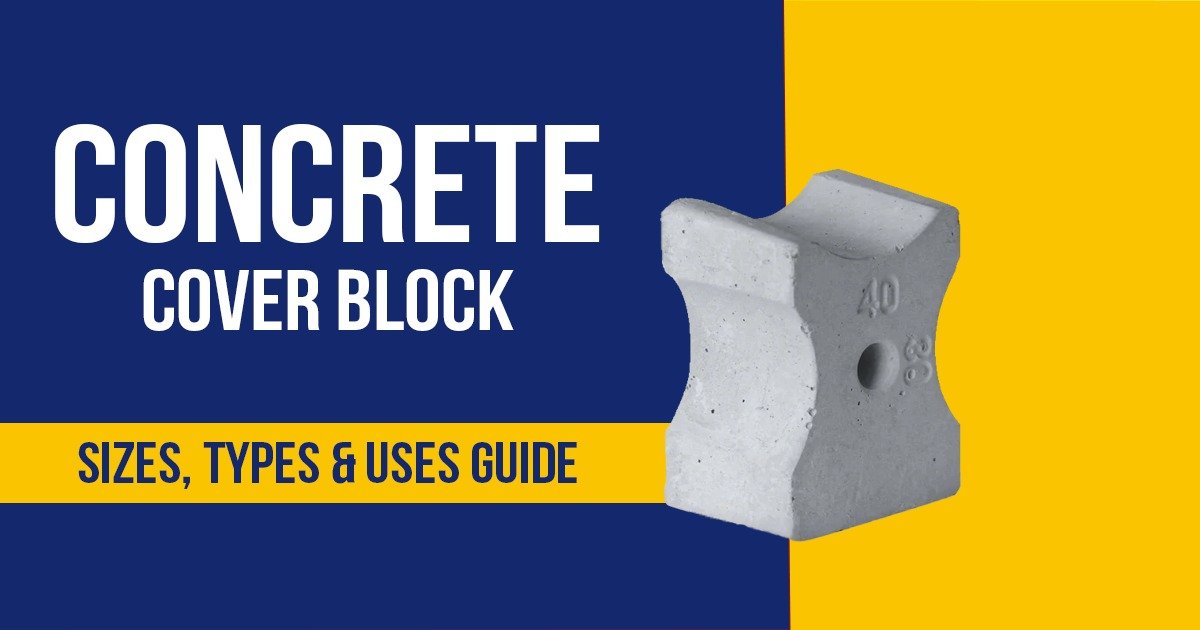
There is an important connection between concrete paver blocks and another essential construction product that most people do not think about together: concrete cover blocks.
When an RCC structure is being built, whether it is a slab, column, beam, or footing, the steel reinforcement bars must be kept at a precise distance from the concrete surface. This distance is called the cover. It protects the steel from moisture, corrosion, and external damage over the life of the structure.
To maintain this cover accurately during pouring, small precast units called cement cover blocks or concrete cover blocks are placed beneath and around the rebar before the concrete is poured. These blocks hold the steel in exactly the right position and become permanently embedded in the structure.
The connection to paver blocks is this: both products demand the same discipline in manufacturing. Precise dimensions. Correct compressive strength. Consistent quality. A manufacturer who gets cover blocks right tends to get paver blocks right too, because both require the same commitment to controlled production processes.
This is why sourcing both products from a single trusted manufacturer is a smart decision for any construction project.
5 Things That Separate a Quality Concrete Paver Block From a Poor One
Understanding this will protect you from making an expensive sourcing mistake.
Cement Content and Mix Design
A properly designed mix uses the right proportion of cement, fine aggregate, and coarse aggregate. Manufacturers who cut costs by reducing cement content produce blocks that look identical but fail much sooner under load and weather exposure.
Compaction Method
Hydraulic press compaction produces a denser, stronger block compared to manual tamping or vibration-only methods. Always ask about the production machinery being used.
Curing Duration
Curing is what gives concrete its strength. Proper curing requires a minimum of 7 days of water curing or equivalent steam curing. Blocks dispatched within 2 to 3 days of production are almost certainly under-cured and will show lower strength in the field.
Dimensional Accuracy
When blocks vary in size beyond acceptable tolerances, the joints become uneven, surfaces develop lips and ridges, and the overall finish looks unprofessional. Precise moulds and consistent production discipline are what ensure dimensional accuracy.
Surface Finish and Edge Sharpness
A quality block has sharp, clean edges and a uniform surface texture. Rough, pitted surfaces or crumbling edges are signs of poor raw material quality or inadequate compaction.
Myths About Concrete Paver Blocks That Need to Be Cleared
Myth 1: All paver blocks are the same
They are not. The difference between a well-manufactured block and a poorly made one is invisible to the naked eye but shows up very clearly within one monsoon season on site.
Myth 2: Thicker always means better
Thickness should match the application. Oversizing adds unnecessary cost. Undersizing leads to failure. Match the specification to the load requirement.
Myth 3: Paver blocks are only for aesthetics
Many engineers treat paver blocks as a decorative choice. In reality, they are a structural surface material with load-bearing requirements, drainage functions, and long-term maintenance implications.
Myth 4: Any local supplier will do
Local availability matters for logistics, but quality cannot be compromised for convenience. The right question is not who is closest but who has a verified track record of consistent quality.
Goyal Cement Blocking: Where Quality Is Part of the Process
Goyal Cement Blocking has been manufacturing concrete paver blocks and related construction materials from Hodal, Palwal, Haryana for over 8 years. What has kept them growing consistently is not advertising. It is repeat orders from builders and contractors who trust the product.
Their client base includes infrastructure giants like Larsen and Toubro, Tata Projects, NCC, Afcons, NCRTC, Indian Oil, and many more. These organisations run their own quality checks and procurement standards. Their continued reliance on Goyal Cement Blocking is a stronger endorsement than any brochure could provide.
The product range covers everything a construction project needs:
- Concrete paver blocks in multiple designs, thicknesses, and finishes
- Concrete cover blocks for slabs, columns, beams, and footings
- PVC cover blocks for precise reinforcement spacing
- Pilling blocks for foundation work
- Precast concrete blocks for diverse applications
- Concrete chequered tiles for industrial and commercial flooring
What makes the supply relationship work is not just product quality. It is consistency. Every batch meets the same standard. Dimensions are accurate. Strength is verified. Delivery timelines are respected.
For contractors managing multiple projects simultaneously, that kind of reliability is genuinely valuable.
Wrapping It Up: Knowledge Is the Best Construction Tool
Concrete paver blocks are not complicated. But like every construction material, the difference between a successful project and a frustrating one comes down to how well you understand what you are buying and who you are buying it from.
Choose the right thickness for the application. Ask for test reports. Verify the manufacturer's process. And prioritise a supplier with a proven track record over one offering the lowest price.
If your next project needs concrete paver blocks that meet IS standards, hold up under real-world conditions, and arrive on time, Goyal Cement Blocking is the manufacturer worth calling.
Get in touch with Goyal Cement Blocking today. Phone: +91 8307066683 Email: goyalcementblocking@gmail.com Location: Hodal, Palwal, Haryana, India
Frequently Asked Questions
Quick answers to what people usually ask.