
If you have ever walked on a beautifully patterned driveway, footpath, or parking lot and wondered how it was built so quickly and so evenly, chances are you were standing on concrete interlocking blocks. They are one of the most practical inventions in modern construction — strong, good-looking, and surprisingly simple to install.
At Goyal Cement Blocking, we manufacture and supply these blocks every single day, and we talk to contractors, architects, and homeowners who often have the same basic questions: What exactly are interlocking blocks? How are they different from regular bricks? Which type suits my project? In this guide, we are going to answer all of that in plain, simple language — no heavy jargon, just honest, useful information.
What Are Concrete Interlocking Blocks?
Concrete interlocking blocks are precast concrete units designed with a shape that allows them to "lock" into each other when placed side by side, without needing mortar or cement to hold them together. Think of them like giant, heavy-duty puzzle pieces. Their edges are shaped — sometimes with a zigzag, sometimes with a dogbone pattern, sometimes with simple rectangular tongue-and-groove profiles — so that once they are laid down, they grip their neighbours and stay put under load.
This interlocking action is what makes them so different from ordinary paving stones. A normal flat paver can shift sideways under the weight of a vehicle, but an interlocking block resists that lateral movement because it is physically keyed into the blocks around it. That's the whole secret behind their strength.
They are made from a carefully controlled mix of cement, sand, aggregate, and water, then compacted under high pressure and vibration in a mould — a process that gives them their density and long life. A good manufacturer, like Goyal Cement Blocking, tests every batch for compressive strength and water absorption before it leaves the factory, because a weak block today becomes a cracked driveway two monsoons from now.
Why Interlocking Blocks Are So Popular Today
Construction has changed a lot over the last decade, and interlocking blocks sit right at the centre of that change. Here's why they've become the go-to choice for driveways, footpaths, industrial yards, and even boundary walls:
1. No mortar required. Because the blocks lock into one another, you save on cement, labour, and time. There's no waiting for mortar to cure before you can use the surface.
2. Easy repair and reuse. If a pipe bursts underneath a paved area, you don't need to break the surface. You simply lift the blocks, fix the pipe, and place the same blocks back. Try doing that with a solid concrete slab.
3. Better drainage. Small gaps between blocks allow rainwater to seep through gradually instead of pooling on the surface, which reduces waterlogging — something every Indian city desperately needs during monsoon season.
4. Load-bearing strength. Interlocking paving blocks are used in airports, container yards, and highway shoulders precisely because they can handle heavy, repeated loads without cracking.
5. Aesthetic flexibility. They come in multiple shapes, colours, and finishes, so a driveway can look as stylish as it is durable.
Types of Concrete Interlocking Blocks
Not all interlocking blocks are built for the same job. Here are the main types you'll come across, and where each one fits best.
Interlocking Paving Blocks
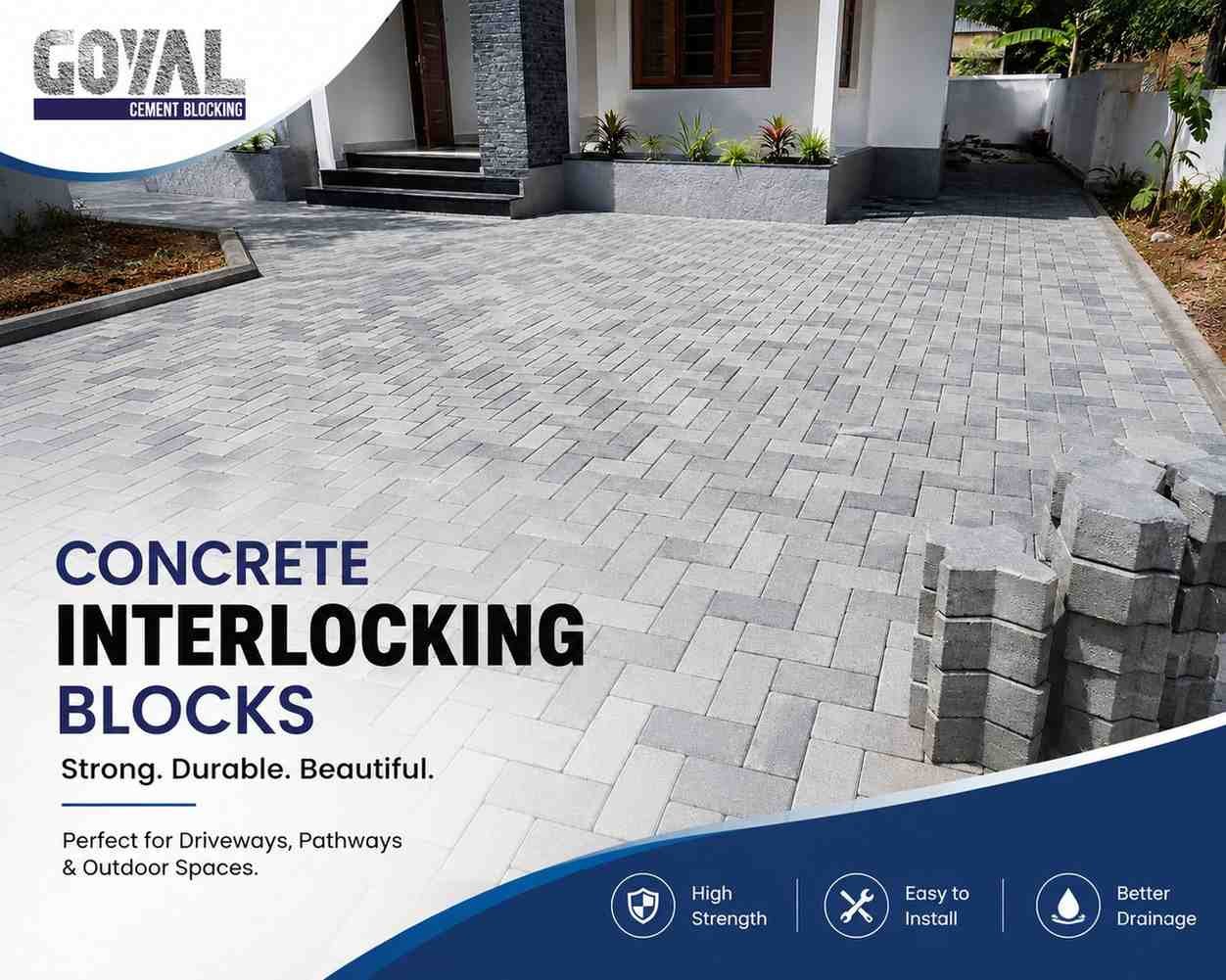
These are the most common type, used for driveways, footpaths, parking areas, and garden pathways. Interlocking paving blocks come in shapes like I-blocks, zigzag blocks, hexagonal blocks, and rectangular pavers. They are usually laid over a compacted sand bed, which allows for slight flexibility — meaning they don't crack the way rigid concrete slabs do when the ground shifts slightly.
If you're designing a residential driveway or a commercial parking lot, this is almost always the category you'll be shopping in. At Goyal Cement Blocking, our paving blocks are made to IS-standard strength ratings so they hold up to both foot traffic and vehicle loads without wearing down.
Interlocking Cinder Blocks
Interlocking cinder blocks are a slightly different animal. Traditional cinder blocks are made using coal cinders as a lightweight aggregate, though today most "cinder blocks" in the market are actually made with fly ash or lightweight concrete aggregate for similar benefits. The interlocking version is designed for wall construction rather than flooring — the blocks stack and key into each other vertically, cutting down on the mortar needed between courses.
They're popular for boundary walls, low-cost housing, and utility structures because they are lighter than solid concrete blocks, which means less strain on the foundation and faster construction. They also offer decent thermal insulation, keeping interiors a bit cooler in summer.
Interlocking Breeze Blocks
Interlocking breeze blocks are closely related to cinder blocks — in fact, the term "breeze block" is often used interchangeably with cinder block in different regions. They typically have a lighter, more porous structure, which makes them easier to cut, drill, and handle on site. Because of their lighter weight and good thermal properties, breeze blocks are frequently chosen for non-load-bearing partition walls, compound walls, and decorative screen walls with perforated patterns that let in light and air while maintaining privacy.
Precast Concrete Interlocking Kerbstones and Pilling Blocks
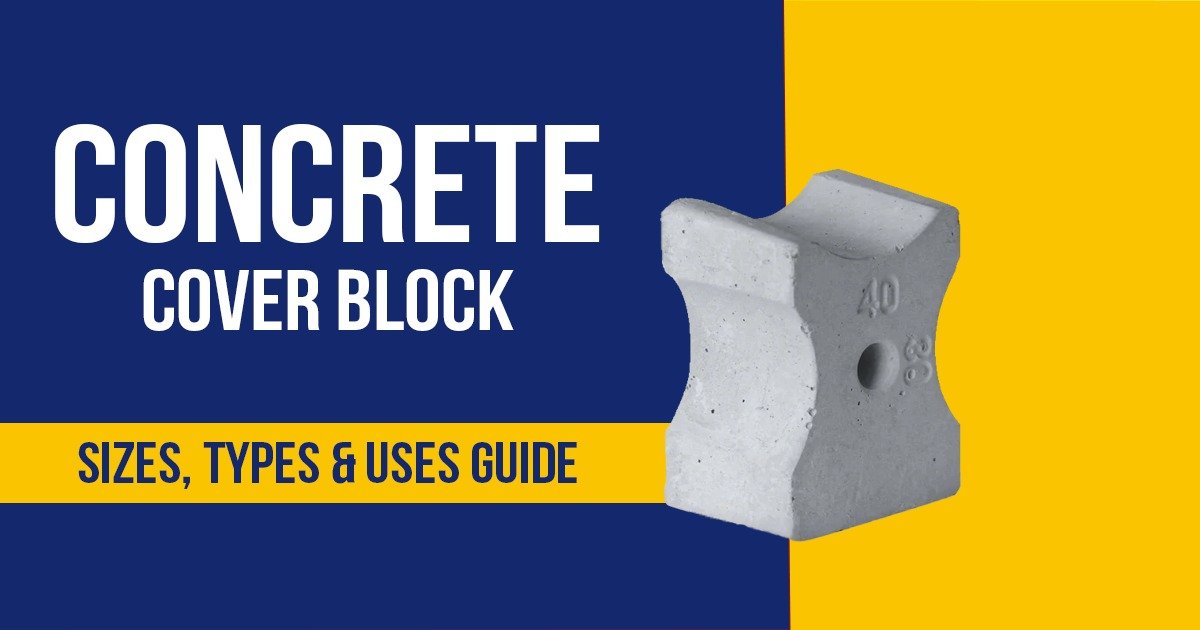
Beyond flooring and walls, interlocking technology is also used in kerbstones (for road edges and landscaping borders) and pilling blocks (used to stack and support reinforcement bars at construction sites, keeping the correct spacing during concrete pouring). These may not be the first thing people picture when they hear "interlocking block," but they follow the same core engineering principle — precision-moulded shapes that fit together for stability.
Benefits of Choosing Interlocking Blocks Over Traditional Construction Methods
It's worth pausing here to really compare interlocking blocks against traditional brick-and-mortar or plain concrete construction, because the difference in real-world performance is significant.
- Speed of construction: A trained team can lay interlocking paving blocks far faster than pouring and finishing a concrete slab, since there's no curing time before the surface can bear weight.
- Cost efficiency over the long run: Yes, the upfront material cost can be comparable to other paving methods, but the savings on labour, mortar, and future repairs usually make interlocking blocks cheaper over the life of the project.
- Durability under Indian weather conditions: From scorching summers to heavy monsoons, interlocking blocks handle thermal expansion and water exposure better than plain cement flooring, which tends to crack over time.
- Eco-friendly footprint: Better rainwater percolation through paved surfaces means less burden on stormwater drainage systems and better groundwater recharge — something urban planners increasingly value.
- Low maintenance: A pressure wash now and then is usually all that's needed to keep interlocking pavements looking fresh for years.
How Concrete Interlocking Blocks Are Manufactured
Understanding the manufacturing process helps you judge quality when you're buying. Here's a simplified breakdown of how it's done at a serious manufacturing unit like Goyal Cement Blocking:
- Raw material selection: High-grade cement, washed sand, and graded aggregate are chosen based on the strength class required.
- Batching and mixing: Materials are measured precisely and mixed with a controlled amount of water to get the right consistency — too much water weakens the final block.
- Moulding under pressure: The mix is fed into steel moulds and compacted using hydraulic pressure and vibration, which removes air pockets and increases density.
- Curing: Freshly moulded blocks are cured — often for 21 to 28 days — under controlled moisture conditions to reach their full design strength.
- Quality testing: Sample blocks from each batch are tested for compressive strength, water absorption, and dimensional accuracy before dispatch.
Skipping any one of these steps is usually how you end up with blocks that crack within a year. This is exactly why sourcing from an established, quality-focused manufacturer matters more than most buyers realise.
Where Are Interlocking Blocks Used?
The applications are broader than most people expect:
- Residential driveways and courtyards
- Footpaths and pedestrian plazas
- Commercial parking lots and shopping complexes
- Industrial yards, warehouses, and container handling areas
- Petrol pumps and toll plazas (due to their heavy-load tolerance)
- Garden pathways and landscaping projects
- Boundary and compound walls (cinder and breeze block varieties)
- Highway shoulders and service roads
How to Choose the Right Interlocking Blocks for Your Project
A few practical tips before you place an order:
Match the strength grade to the load. A garden pathway doesn't need the same compressive strength as a truck parking yard. Ask your supplier for the tested strength rating (usually in N/mm²) and match it to your expected traffic.
Check the thickness. Thicker blocks (80mm and above) are generally recommended for vehicular traffic, while thinner blocks work fine for pedestrian-only areas.
Inspect the finish and colour consistency. Blocks from a well-controlled batch should look uniform in colour and texture — inconsistency often signals a poorly mixed batch.
Ask about the base preparation. Even the best blocks will fail if they're laid over a poorly compacted base. A good supplier will guide you on the sand bedding and sub-base requirements too.
Buy from a manufacturer, not just a trader. Manufacturers like Goyal Cement Blocking control the entire production process, which means better consistency and accountability compared to buying through middlemen.
Why Choose Goyal Cement Blocking
With years of manufacturing experience and a client list that includes major names in construction and infrastructure, Goyal Cement Blocking has built its reputation on one simple principle: a block is only as good as the batch it came from. We produce concrete cover blocks, PVC cover blocks, pilling blocks, concrete chequered tiles, and a full range of interlocking paving blocks, all tested for strength and consistency before they leave our facility in Palwal, Haryana.
Whether you're a contractor working on a large infrastructure project or a homeowner planning a driveway, our team can help you pick the right block type, thickness, and finish for your specific requirement — and back it up with reliable delivery.
Final Thoughts
Concrete interlocking blocks aren't just a construction trend — they're a genuinely smarter way to build surfaces that need to last. Whether you need interlocking paving blocks for a driveway, interlocking cinder blocks for a lightweight wall, or interlocking breeze blocks for a ventilated partition, understanding the differences helps you make a decision you won't regret in a few years.
If you're planning your next project and want blocks that are tested, durable, and delivered on time, reach out to Goyal Cement Blocking. We'd be happy to walk you through the right options for your site.
Frequently Asked Questions
Quick answers to what people usually ask.